Welcome, Guest
Login/Register
Source: Sayer Ji – Truth, Sovereignty, Wellness
The Methylene Blue Mistake:
How a 19th-Century Textile Dye Became a “Mitochondrial Medicine”
And why nature has been outperforming synthetic chemistry since long before Heinrich Caro picked up a dye vat
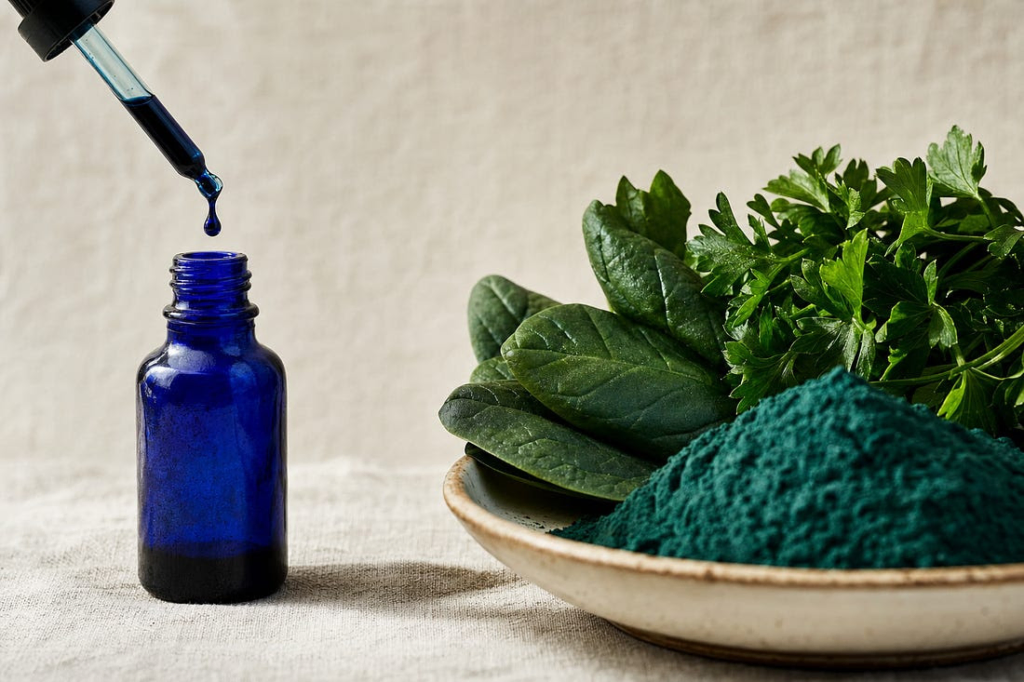
It is being sold across the wellness world as a daily brain booster.
Meanwhile, the green pigment in your salad and the blue pigment in spirulina do the same thing — safer, with better evidence, and as the way your body was designed to harvest sunlight in the first place.
Scroll through wellness Substacks, biohacker podcasts, or longevity posts on X in 2026
and you cannot miss methylene blue.
A tiny dropper bottle of deep navy liquid.
A blue-tongued grin.
Claims that it “supercharges mitochondria,” “uncloggs neurons,” and turns aging brains young again.
It is one of the strangest stories in the modern wellness movement.
Because methylene blue is not a botanical, not a peptide, not a mushroom extract. It is a synthetic phenothiazine dye, invented in 1876 by a German chemist named Heinrich Caro to color cotton and wool. It has been used to stain microscope slides, to disinfect aquariums, to treat malaria when nothing else was available in the 19th century, and — in modern emergency rooms — as an acute antidote for a rare blood disorder called methemoglobinemia.
It was never designed as a daily supplement. And once you look at what the toxicology literature actually says — the kind of literature that the FDA’s own regulators read before approving a new drug — the case for taking methylene blue as a nootropic falls apart.
Worse, it falls apart precisely because there is a better, safer, evolutionarily older molecule doing the same job in your mitochondria — and it is sitting in your refrigerator.
This is the story of how a textile dye got mistaken for a mitochondrial medicine, and why the chlorophyll in your spinach and the phycocyanin in spirulina are doing what methylene blue claims to do, without the genotoxicity.
The Three Molecules That Absorb the Same Light
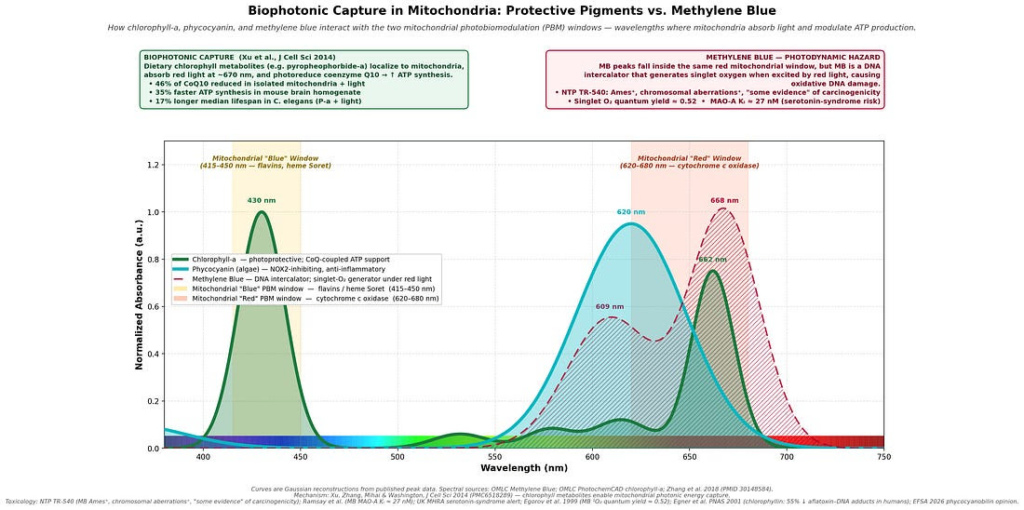
Let me start with something striking. If you graph the wavelengths of light absorbed by chlorophyll-a (the green pigment in plants), phycocyanin (the blue pigment in spirulina), and methylene blue, the three curves overlap in two specific bands:
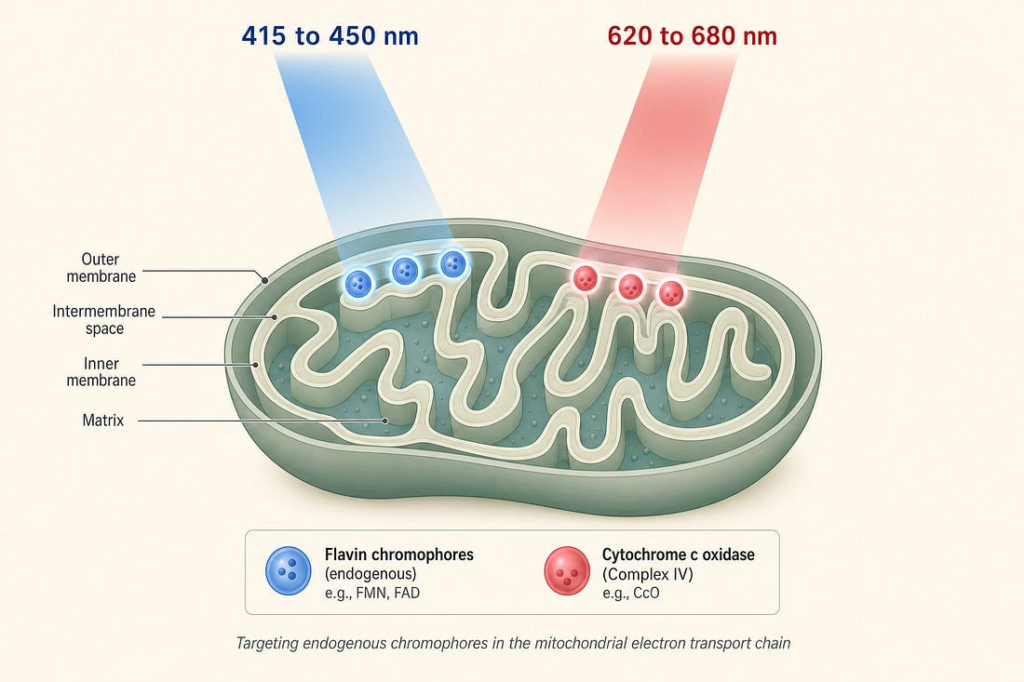
Blue light, around 415–450 nanometers
Red light, around 620–680 nanometers
These two bands are not arbitrary. They are the two windows where your mitochondria — the ‘energy factories’ inside every cell — are designed to receive light. Scientists call this photobiomodulation (PBM): the well-documented phenomenon that red and near-infrared light at non-thermal intensities can boost cellular energy production by stimulating an enzyme inside Complex IV of the mitochondrial respiratory chain (Hamblin 2017, AIMS Biophysics).
Red-light therapy panels work because of this. Sunlight contains these wavelengths. And so do — remarkably — chlorophyll, phycocyanin, and methylene blue.
So the wellness pitch makes a kind of intuitive sense. If red light boosts mitochondria, and methylene blue absorbs red light, then maybe methylene blue is like a sponge that helps your mitochondria capture more light. Right?
This is where the story takes a sharp turn.
First, the Awe
Before we get to the toxicology, you need to understand what is actually happening inside your cells. Not because it is interesting background, but because it changes the ethical logic of the entire debate.
The precautionary principle — the foundational standard in both medicine and environmental science — holds that the burden of proof falls on whoever proposes to intervene in a system, not on those who question the intervention. The more complex and finely tuned the system, the higher that burden becomes.
What follows is not a metaphor. It is a description of what your mitochondria are actually doing, right now, measured and published in peer-reviewed literature. Once you understand the precision of what is already running, the question stops being “does methylene blue help?” and becomes “what is the cost of interfering with this?”
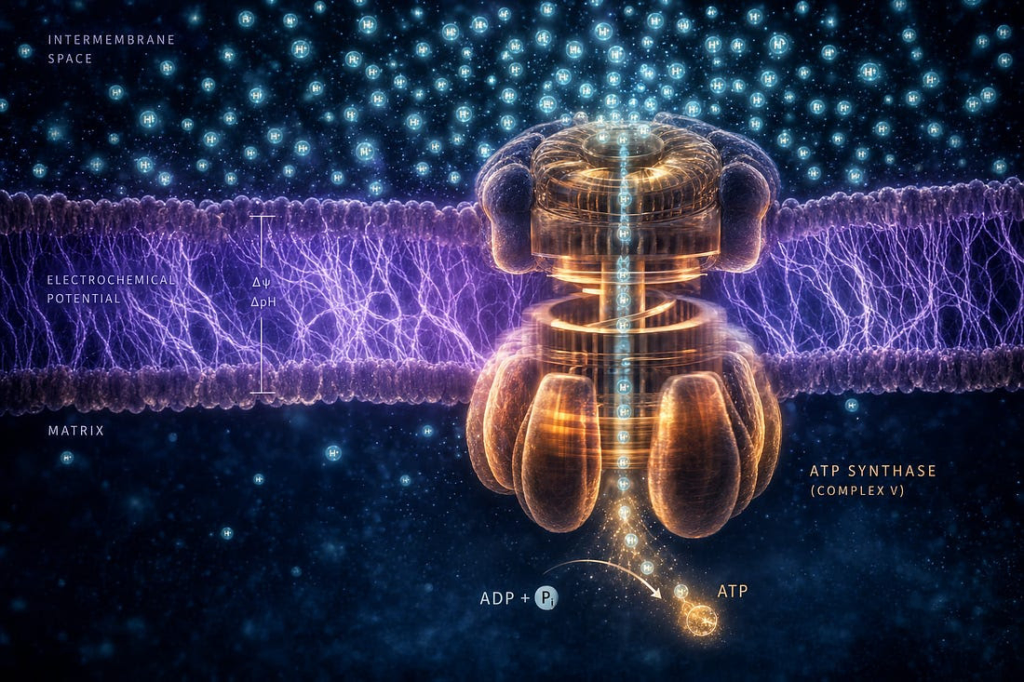
The inner membrane of a single mitochondrion maintains an electric field of approximately 30 million volts per meter. For comparison, high-voltage power lines operate at 155,000 to 765,000 volts per meter.
The field inside your mitochondria is comparable in density to a lightning bolt or a solar flare.
Here is why.
The voltage across the mitochondrial membrane is modest — roughly 150 millivolts, less than a AA battery. But the membrane is only 5 nanometers thick — about 50,000 times thinner than a human hair. Divide that voltage by that distance and you get a gradient so steep it matches the field that ionizes air in a thunderstorm.
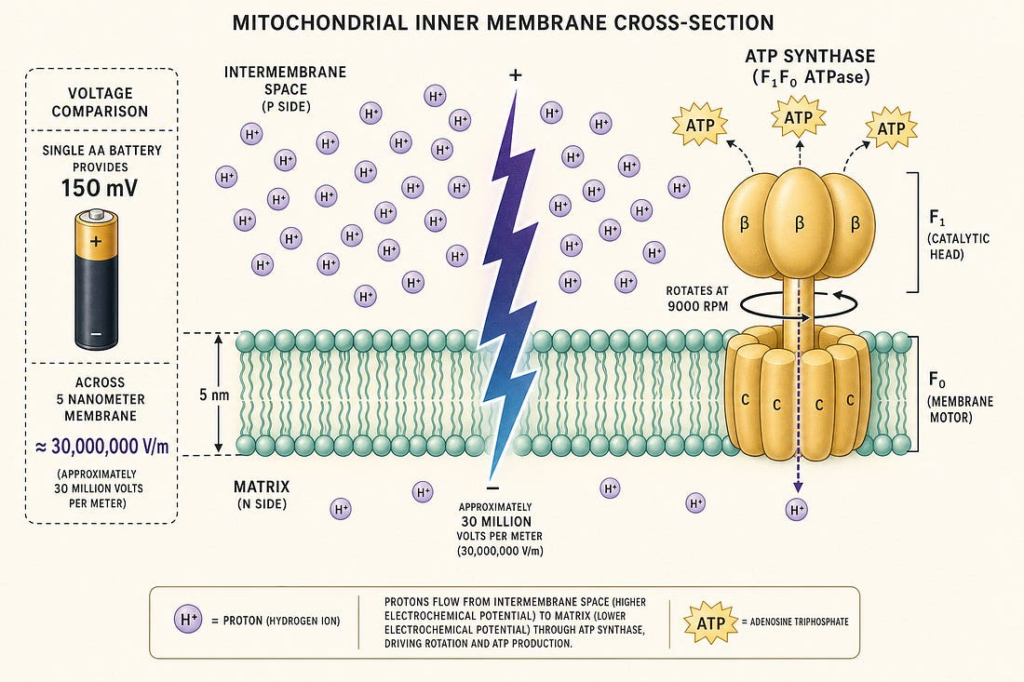
This is not metaphor. It is published, peer-reviewed measurement from Nick Lane and William Martin’s 2010 work in Nature, catalogued in the Harvard BioNumbers database. The “lightning bolt” comparison is in the original scientific literature.
And your body is not doing this in one place. The average cell contains 1,000–2,500 mitochondria. Your body has roughly 30 trillion cells. That is somewhere between 10¹⁶ and 10¹⁷ individual mitochondrial membranes, each sustaining a lightning-bolt-intensity electric field, simultaneously, right now, as you read this sentence.
This field is the engine. A molecular turbine called ATP synthase sits at the membrane and harnesses it. Protons are driven down the gradient like water over a dam — except the “dam” is 10 hydrogen atoms wide and the “water” is a torrent of charged particles responding to 30 million volts per meter. Each proton that crosses the membrane physically rotates the ATP synthase rotor at up to 9,000 RPM. Every rotation mints three molecules of ATP — the universal energy currency of life. Your body recycles roughly its own body weight in ATP every single day.
You are not just a biochemical machine. At the mitochondrial scale, you are an electromagnetic one.
Same Wavelength, Opposite Biology
When chlorophyll absorbs a red photon — whether it’s in a leaf or, as we’ll see, inside your liver mitochondria — it does what photosynthesis has done for two billion years: it kicks an electron into a productive cascade that ends with energy stored as ATP. This is called Type I photochemistry. The reaction does not generate reactive oxygen species. It is, in effect, a clean transfer of solar energy into biological currency.
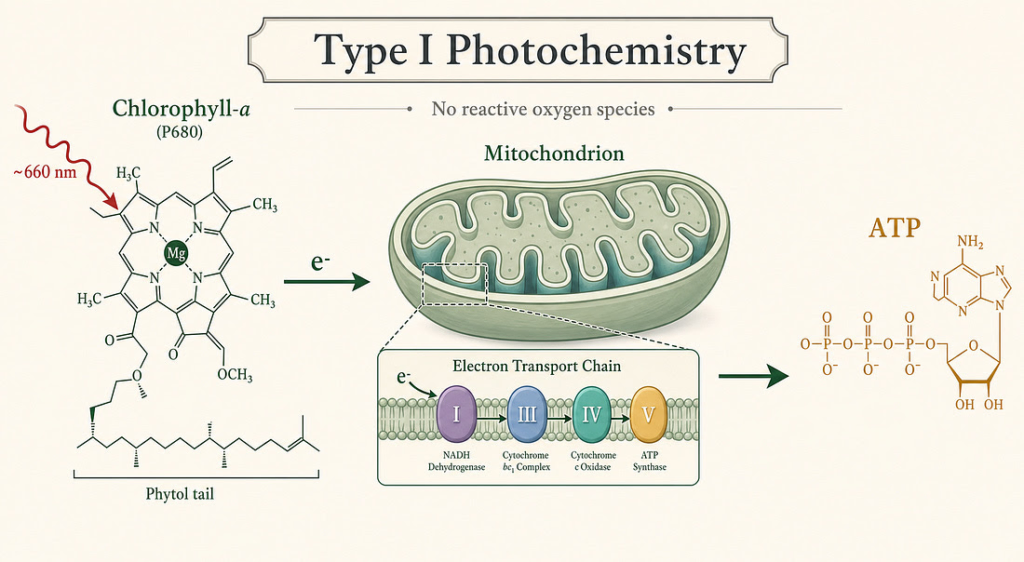
When methylene blue absorbs that same red photon, something very different happens.
Methylene blue is what photochemists call a Type II photosensitizer.
Its excited state hands its energy not to a useful electron acceptor, but to ground-state molecular oxygen — converting it into singlet oxygen, a hyper-reactive form of oxygen that attacks DNA, oxidizes lipids, and damages proteins.
This is not a footnote. It is well-documented mainstream chemistry. The singlet-oxygen quantum yield of methylene blue is approximately 0.52 (Lutkus et al. 2019) — which is essentially the value that makes it the active ingredient in antimicrobial photodynamic therapy, where doctors deliberately use methylene blue plus red light to kill bacteria, fungi, and tumor cells.
Read that sentence again. The same chemistry that makes methylene blue an antimicrobial agent under red light — singlet oxygen production, oxidative DNA damage — is the chemistry that runs inside your cells when you take methylene blue and sit in front of a red-light panel.
Methylene blue and red-light therapy is a mechanism for photosensitized DNA damage.
“Higher concentrations produce inhibitory rather than augmentation effects on metabolism… the nootropic window lies at extremely small doses, significantly lower than those used clinically.” — Singh et al., J Cereb Blood Flow Metab, 2023
What the Toxicology Literature Actually Shows
I want to walk through the formal toxicology of methylene blue, because the wellness conversation has almost completely buried it. None of this is obscure. All of it is in the published peer-reviewed literature, and the foundational source is the U.S. National Toxicology Program’s two-year carcinogenicity study, NTP TR-540, published in 2008.
The NTP is the federal agency that the U.S. government funds specifically to identify chemicals that cause cancer. Their two-year rodent bioassay is the gold standard for predicting human carcinogenicity. Here is what NTP found when they fed methylene blue to rats and mice for two years:
* Ames mutagenicity test, positive across five Salmonella strains (TA98, TA100, TA1535, TA97, WP2). The Ames test is the most widely used early-warning screen for substances that damage DNA. Methylene blue was positive both with and without metabolic activation (NTP TR-540).
* Chromosomal aberrations and sister-chromatid exchanges in Chinese hamster ovary cells. These are direct measures of structural DNA damage.
* “Some evidence of carcinogenic activity” in male rats — specifically, pancreatic islet cell tumors.
* “Some evidence of carcinogenic activity” in male mice — specifically, small intestinal carcinomas.
* Equivocal evidence in female mice.
This is not a fringe paper. This is the federal government’s own carcinogenicity study, conducted to the standards used to regulate the chemical industry. It has been sitting in the public record since 2008.
To this we have to add three more layers that any honest discussion has to address:
The result: methylene blue significantly reduced cerebral metabolic rate of oxygen by 7.9% at 0.5 mg/kg and by 11.8% at 1 mg/kg. Cerebral blood flow dropped by 8.3–8.4% at both doses. The drug suppressed brain metabolism. It did not boost it (Singh et al. 2023).
Read that one more time. In actual living humans, at the doses biohackers are taking, methylene blue made the brain use less oxygen, not more.
Learn more by reading my previous articles on this topic below.
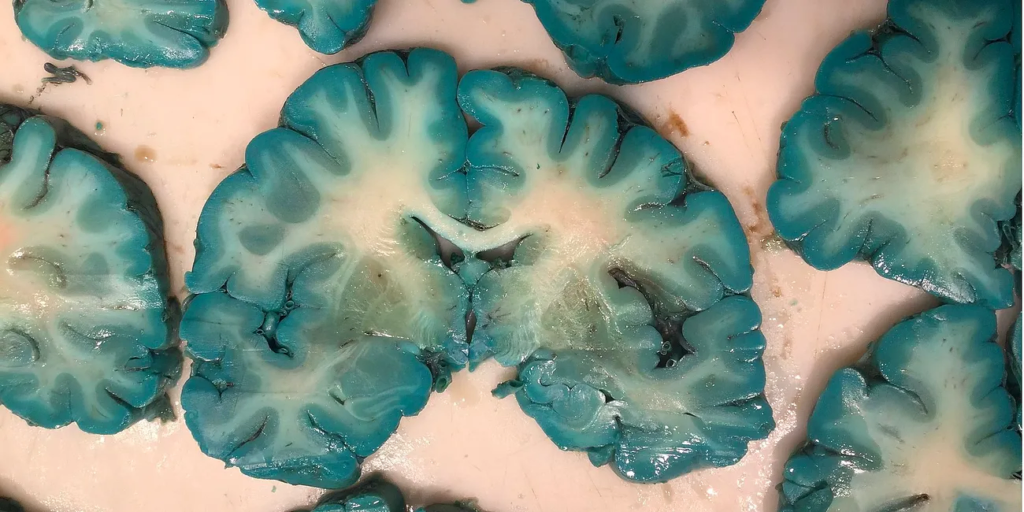
The Blue Brain Effect: Methylene Blue’s Dark Side & What You Should Be Using Instead
Sayer Ji
·
March 9, 2025
The Blue Brain Effect: Methylene Blue’s Dark Side & What You Should Be Using Instead
If this is what methylene blue in the brain post-mortem looks like, what is it doing while you’re alive?
Read full story
The Hidden Story: Mammals Are Quietly Photosynthetic
Here is the part of this story that almost no one in the methylene blue community knows. It changes everything.
In 2014, a team of researchers at Columbia University — Xu, Zhang, Mihai, and Washington — published a paper in the Journal of Cell Science titled “Light-harvesting chlorophyll pigments enable mammalian mitochondria to capture photonic energy and produce ATP” (Xu et al. 2014).
This was not new to readers of GreenMedInfo. In 2015 — nearly a decade before methylene blue became a wellness phenomenon — I reported on this same discovery and proposed what the Columbia authors themselves implied: that mammals, including humans, should be reclassified as photoheterotrophs — organisms capable of deriving energy from both food and sunlight, depending on the chlorophyll content of their diet. The supplement industry spent that decade selling blue dye instead.
The findings, in plain language:
When mice — or, by extension, humans — eat green plants, the chlorophyll molecules do not simply pass through.
Their breakdown products, specifically pyropheophorbide-a (a metabolite of chlorophyll that loses its central magnesium ion during digestion), are absorbed and selectively accumulate in mitochondria — specifically, at concentrations 2.3 times higher inside the mitochondria than in surrounding cellular fluid.

Once inside mitochondria, these chlorophyll metabolites do something remarkable:
They donate electrons directly to coenzyme Q10, the universal mobile electron carrier in the mitochondrial respiratory chain — reducing CoQ10 by 46% in vitro.
They boost ATP synthesis by 35% in mouse brain mitochondrial homogenates when exposed to red light.
In whole-animal experiments using C. elegans (the standard worm model in aging research), supplementation with chlorophyll metabolites extended median lifespan by 17% in the presence of red light.
The Columbia authors wrote, in their abstract: “We propose that through consumption of plant chlorophyll pigments, animals, too, are able to derive energy directly from sunlight.”
This is not a fringe paper. This is a peer-reviewed, mechanistically detailed study in a respected cell biology journal.
It is exactly the kind of paper that the methylene blue community could and should cite — except it does not, because it points to the obvious conclusion:
the molecule that evolution designed to do this job is chlorophyll, not a phenothiazine dye.
We are quietly photosynthetic. Our mitochondria evolved alongside plant pigments for the entire history of mammalian life. Methylene blue did not exist anywhere in nature until 1876.
The Counter-Evidence That Wellness Skeptics Should Hear
Let me steelman the methylene blue case one more time, because readers and methylene blue proponents who have pushed back on my own earlier writings are right to ask: what if methylene blue has real benefits despite its toxicology?
The strongest evidence in MB’s favor is this:
In cell culture and in isolated mitochondria, nanomolar to low-micromolar concentrations of methylene blue increase cytochrome c oxidase activity and ATP production.
In rodent models of traumatic brain injury and Alzheimer’s disease, MB has shown neuroprotective effects.
Some small human studies of MB in age-related cognitive decline have shown short-term cognitive improvements.
All of this is real. None of it is fabricated. The Gonzalez-Lima laboratory at the University of Texas has published reproducible mechanistic data showing that methylene blue can function as a partial electron shuttle, accepting electrons from NADH and donating them to cytochrome c.
But here is where the steelman breaks:
1. The 2023 human PET study showed the opposite. At the very doses being recommended online — 0.5 to 1 mg/kg — MB suppressed brain oxygen metabolism in living humans. The in vitro story did not survive contact with human physiology.
2. The dose-response is hormetic and narrow. Above ~10 µM, methylene blue inhibits mitochondrial function. Casual oral dosing easily overshoots the hypothetical sweet spot.
3. The benefits, even when present, do not erase the toxicology.
A drug can both inhibit MAO-A and damage DNA and boost certain narrow biomarkers. The question is not “does it ever do anything good?” The question is “does it pass a real risk-benefit analysis for chronic daily use?” For methylene blue, the answer is no.
4. The genotoxic signal is not theoretical. Ames-positive in five strains. Chromosomal aberrations. Singlet oxygen production at the exact wavelength of red-light therapy. Some evidence of carcinogenicity in two species. These are not “what-ifs.” They are documented.
5. There is no long-term human randomized controlled trial. Zero. The entire nootropic-dose MB case for chronic use rests on in vitro data, short rodent studies, and acute human challenge experiments — never a year-long, adequately powered RCT with safety endpoints.
The Human Trial That Should Have Ended This Debate
In 2001, Patricia Egner and colleagues published a randomized, double-blind, placebo-controlled trial in the Proceedings of the National Academy of Sciences (Egner et al. 2001).
The setting: Qidong, in Jiangsu Province, China — a region with among the world’s highest rates of liver cancer, driven by unavoidable dietary exposure to aflatoxin, a powerful naturally occurring carcinogen.
The intervention:
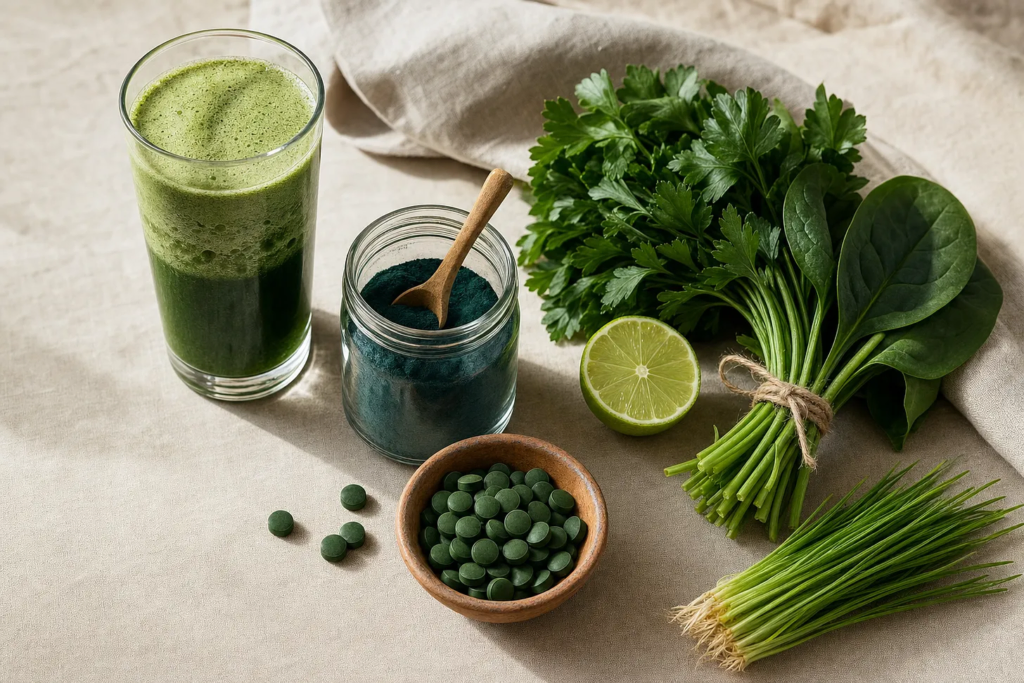
chlorophyllin, a water-soluble derivative of chlorophyll, 100 mg three times daily before meals, for 4 months.
The control: identical placebo.
The participants: 180 healthy adults randomized 1:1.
The primary outcome: urinary aflatoxin-N7-guanine adducts — chemical fingerprints of aflatoxin binding to DNA inside the participants’ livers, measured in their urine.
The result: Chlorophyllin reduced these DNA-damage biomarkers by 55%, compared to placebo (p = 0.036). Among samples where adducts were detectable, the geometric mean reduction was 49% (p < 0.001).
Adverse events: zero. Some participants reported green-tinged stool (cosmetic, expected). No serious side effects.
Let me restate that, because it is one of the cleanest pieces of preventive nutrition data ever published.
In a 180-person randomized controlled trial, taking chlorophyllin for four months reduced direct biological markers of DNA damage in human beings by more than half, with zero side effects.
This is not animal data. This is not in vitro chemistry. This is in-vivo human DNA protection, randomized, placebo-controlled, peer-reviewed in one of the most prestigious general science journals in the world.
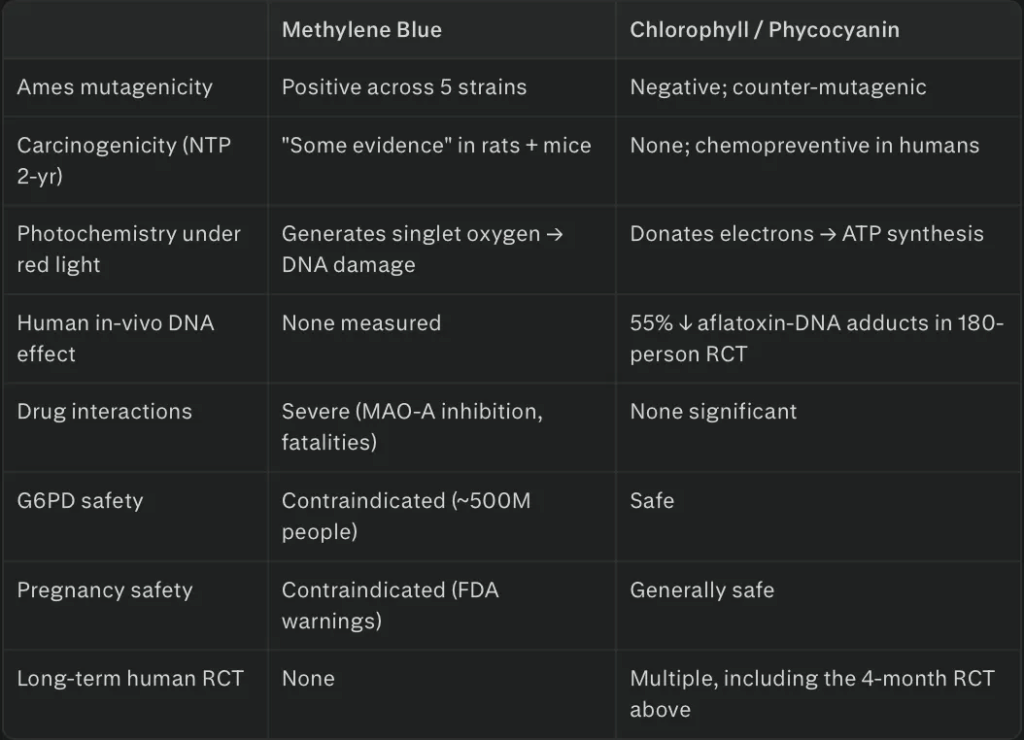
The comparison to methylene blue could not be more stark:
What About Phycocyanin?
The blue pigment in spirulina — phycocyanin — deserves its own paragraph, because it adds the second half of the algal-pigment case.
Phycocyanin’s chromophore, phycocyanobilin, is structurally similar to bilirubin (the molecule that gives bruises and jaundice their yellow color). Bilirubin is now recognized as a powerful endogenous antioxidant. Phycocyanobilin behaves the same way, and Mark McCarty’s group has published extensively on its role as a potent inhibitor of NADPH oxidase 2 (NOX2) — the enzyme that generates much of the inflammatory reactive oxygen species in vascular disease, diabetes, and neurodegeneration (McCarty et al.).
C-phycocyanin has been studied in dozens of human and animal trials for its anti-inflammatory and antioxidant effects. It received FDA GRAS (Generally Recognized as Safe) status in 2012 as a food ingredient. There is no documented analog of NTP TR-540 for phycocyanin — no two-year rodent carcinogenicity study showing mutagenicity, no MAO-A inhibition with fatal drug interactions, no G6PD contraindication.
Eat Light. Don’t Drink Dye.
Here is the bottom line, in the plainest English I can write:
Your mitochondria were designed to receive sunlight, and they were designed to do it through the same molecules that plants and cyanobacteria have used for two billion years: tetrapyrrole pigments like chlorophyll and the bilins.
These molecules accumulate in your mitochondria, donate electrons productively, and have a clean toxicological profile that has been confirmed in randomized human trials.
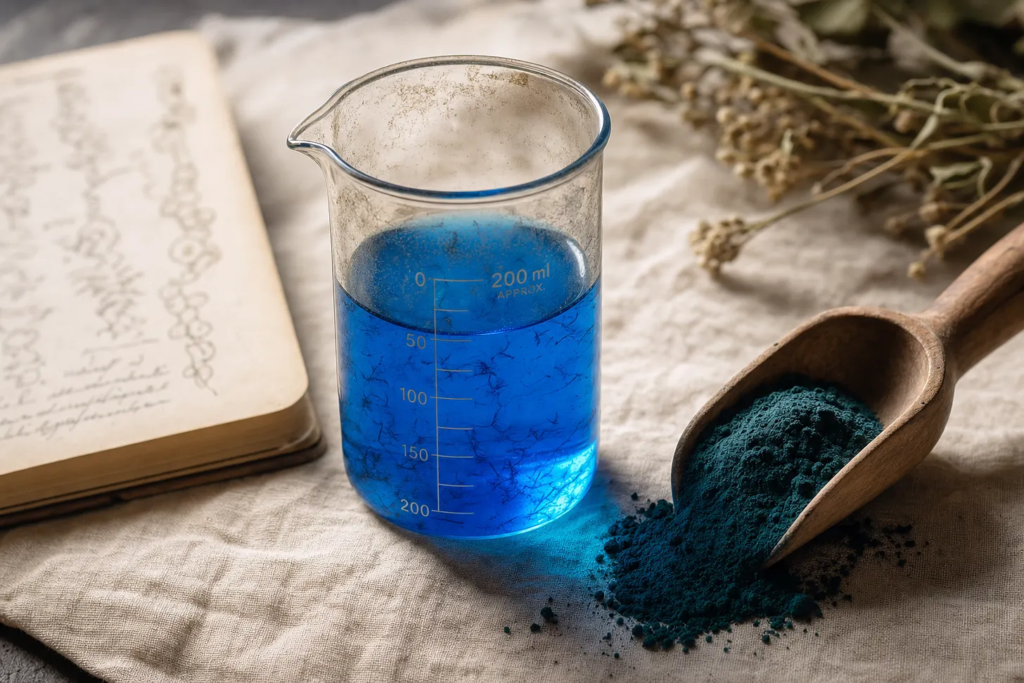
Methylene blue is something else entirely. It is a synthetic textile dye that happens to absorb light in a similar region. Its biology under that same light is opposite — it makes singlet oxygen, damages DNA, and at the doses being recommended online, suppresses brain metabolism in living humans.
Methylene blue has a legitimate, narrow medical role as an emergency antidote for methemoglobinemia, and possibly as an investigational drug for specific neurodegenerative diseases under strict medical supervision. It does not belong in your morning supplement stack.
The food version of the same biology is sitting in your produce aisle and your spirulina jar. Eat green vegetables. Drink spirulina smoothies. Get sunlight on your skin. These are not mystical recommendations. They are what the published, peer-reviewed, randomized, controlled, human evidence supports.
Eat light. Don’t drink dye.
For the Skeptics: What Would Change My Mind
I want to be intellectually honest about this. Here is what would make me re-evaluate:
A long-term (≥1 year), randomized, placebo-controlled trial of nootropic-dose oral MB in humans with genotoxicity biomarkers, MAO-related adverse-event surveillance, and rigorous cognitive endpoints.
Human PET data showing that low-dose oral MB increases — not decreases — cerebral metabolic rate of oxygen.
A mechanistic study identifying a chronic-use MB dosing window with no DNA-adduct or singlet-oxygen signal in vivo.
A negative replication of the Egner et al. chlorophyllin trial or evidence of chronic toxicity from dietary chlorophyll.
None of these currently exist. Until they do, the evidence points one way.
The Companion White Paper
I’ve prepared a full, formally cited investigative white paper that lays out every claim above with primary sources, a full reference list of 38 numbered citations, and a publication-formatted figure mapping all three molecules onto the mitochondrial photobiomodulation windows. It’s available as a separate PDF for readers who want to verify each claim, share with clinicians, or use as a teaching document.
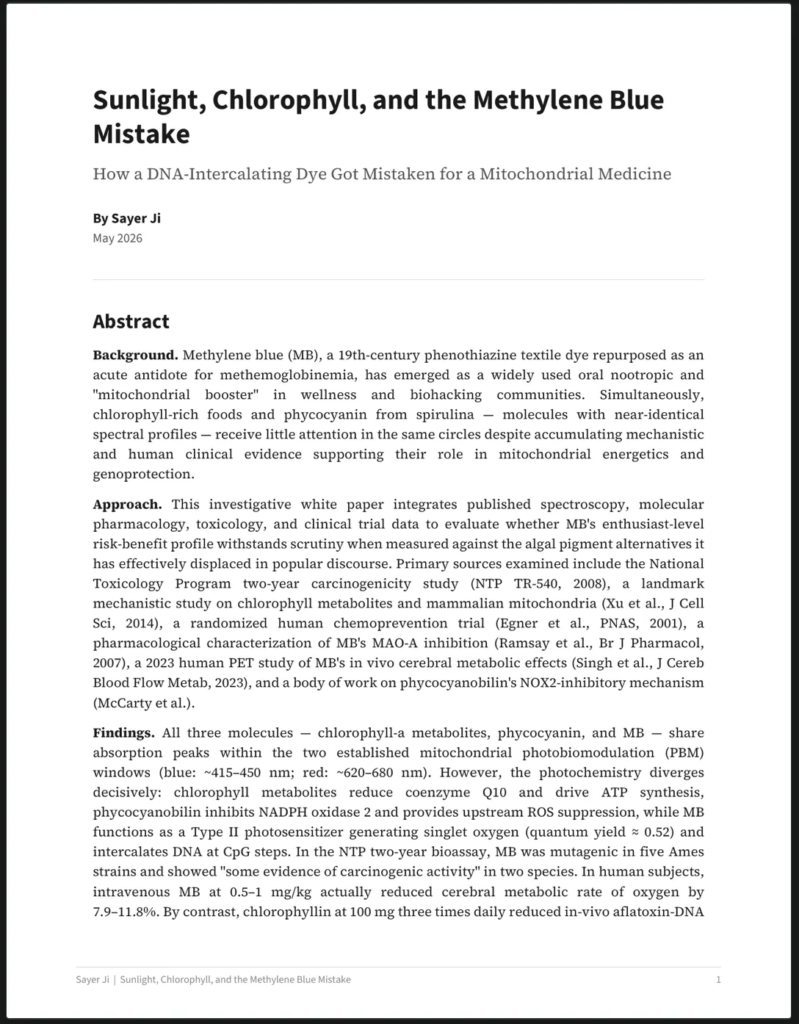
Download the White Paper
If you take methylene blue, share this post and paper with someone who can help you think through the risk-benefit math.
If you recommend methylene blue professionally, please read the NTP TR-540 study and the Singh 2023 PET paper before your next consultation.
And if, like me, you have watched this trend rise without ever endorsing it, this is the evidence base I wish had been in front of every wellness audience two years ago.
Share
The wellness movement has the right intuition: mitochondria matter, light matters, biology is exquisitely responsive to small inputs. But the molecule we should be elevating is not a 19th-century industrial dye. It is the same green pigment that powers every leaf on every tree, and that — quietly, mostly unnoticed by the supplement industry — already lives in your mitochondria when you eat your vegetables.
To learn more about photodynamic therapy, read my recent article on the topic below.
We Are Beings of Light
Sayer Ji
Read full story
Sources & Further Reading
NTP. Toxicology and Carcinogenesis Studies of Methylene Blue Trihydrate. NTP TR 540. 2008. https://ntp.niehs.nih.gov/sites/default/files/ntp/htdocs/lt_rpts/tr540.pdf
Xu C, Zhang J, Mihai DM, Washington I. Light-harvesting chlorophyll pigments enable mammalian mitochondria to capture photonic energy and produce ATP. J Cell Sci. 2014. https://pmc.ncbi.nlm.nih.gov/articles/PMC6518289/
Egner PA et al. Chlorophyllin intervention reduces aflatoxin-DNA adducts in individuals at high risk for liver cancer. PNAS. 2001. https://www.pnas.org/doi/10.1073/pnas.251536898
Ramsay RR, Dunford C, Gillman PK. Methylene blue and serotonin toxicity: inhibition of MAO-A confirms a theoretical prediction. Br J Pharmacol. 2007. https://pmc.ncbi.nlm.nih.gov/articles/PMC2078225/
Singh N et al. The effects of acute methylene blue administration on cerebral blood flow and metabolism in humans and rats. J Cereb Blood Flow Metab. 2023. https://pubmed.ncbi.nlm.nih.gov/36803299/
Lutkus LV, Rickenbach SS, McCormick TM. Singlet oxygen quantum yields determined by oxygen consumption. J Photochem Photobiol A Chem. 2019. https://par.nsf.gov/servlets/purl/10099815
MHRA. Methylthioninium chloride (methylene blue): update on CNS toxicity. Drug Safety Update. December 2014. https://www.gov.uk/drug-safety-update/methylthioninium-chloride-methylene-blue-update-on-central-nervous-system-cns-toxicity
Companion white paper with full citations and figure available on request. Sayer Ji is the founder of GreenMedInfo and an investigative researcher in public health policy. He declares no financial interest in chlorophyllin, spirulina, or phycocyanin supplement products.
© 2026 Sayer Ji
548 Market Street PMB 72296, San Francisco, CA 94104
https://sayerji.substack.com/p/the-methylene-blue-mistake-how-a?img=https%3A%2F%2Fsubstack-post-media.s3.amazonaws.com%2Fpublic%2Fimages%2F3ae50e9e-d258-4275-9bf1-20443ed09e0f_3799x1892.png&open=false

