
Welcome, Guest
Login/Register
How Spicy Food Can Save Your Life: The Science of Curry’s Artery-Opening Power
Sayer Ji
Jul 22, 2026
Curry Dilates Arteries With One Serving
Did you know that a single culinary serving of curry can open your arteries within the hour, cancelling out the vascular damage of the very meal it seasons? A decade of new research now shows this humble kitchen act may be one of the most quietly powerful things you can do for your heart, and for how long you live.
When we think of spices, we think of flavor. We reach for them to make food taste alive. But across every traditional culture that has cooked with them, spices were never merely aesthetic. They were medicine hidden in plain sight, folded into the daily act of eating so seamlessly that we forgot they were there.
Modern science is now catching up to what grandmothers in Chennai, Oaxaca, and Sichuan knew in their hands. The evidence is no longer a single suggestive study. It is a convergent body of work spanning half a million people, multiple randomized human trials, and umbrella meta-analyses, all pointing in the same direction: that the spices you already own can measurably protect your cardiovascular system, and that the people who use them regularly tend to live longer.
Let’s follow the thread.
The Study That Started the Conversation
A landmark trial published in Nutrition Journal, “A single consumption of curry improved postprandial endothelial function in healthy male subjects” (Nakayama et al.), demonstrated something remarkable and immediate.
Researchers fed 14 healthy men, average age 45, either a single serving of curry or an identical-looking spice-free control meal (about 500 kcal with rice), then measured what happened inside their blood vessels one hour later. The curry itself was a traditional eight-spice blend: clove, coriander, cumin, garlic, ginger, onion, red pepper, and turmeric.
The measurement they used, flow-mediated dilation (FMD), is one of the most respected non-invasive windows into cardiovascular health we have. It gauges how well the inner lining of your arteries, the endothelium, can relax and let blood flow. The results split cleanly:
The plain control meal made arteries stiffer. FMD dropped from 5.8% to 5.1%.
The curry meal made arteries open. FMD rose from 5.2% to 6.6%.
In other words, the very same meal that constricts your arteries when eaten plain can be transformed into one that opens them, simply by adding the spices humans have been cooking with for millennia. The researchers concluded that curry “ameliorates postprandial endothelial dysfunction and may be beneficial for preventing cardiovascular events.”
There is a beautiful piece of etymology buried in all of this. The word recipe, in its first recorded 16th-century use, literally meant a “medical prescription.” Every family recipe passed down through the generations may be exactly that: a prescription we forgot we were writing.
Why That 1.4-Point Swing Actually Matters
It would be easy to glance at “FMD went from 5.2 to 6.6” and shrug. Here is why you shouldn’t.
FMD is not an abstract lab curiosity. It is one of the strongest independent predictors of whether a person will have a heart attack or stroke in the years ahead. Pooled analyses of tens of thousands of people have quantified the relationship with striking consistency: each 1% improvement in FMD is associated with roughly a 9% to 13% lower risk of future cardiovascular events (Inaba et al.; Ras et al.).
Now recall the numbers. The plain meal cut FMD by about 0.7 points. The curry meal raised it by about 1.4 points. The gap between eating your dinner plain and eating it spiced was, in that hour, on the order of a two-point swing in the single best predictor of your vascular future, in the favorable direction.
That is what “spicy food can save your life” actually means at the level of physiology. Not hyperbole. Arithmetic.
From One Study to a Body of Evidence
The single-serving curry trial was a spark. In the decade since, independent research groups have repeatedly confirmed and extended it, which is exactly what you want to see before you trust a finding.
Penn State, 2020. In a randomized crossover trial, Petersen and colleagues added a culinary dose of a 13-spice blend to a heavy, high-saturated-fat, high-carbohydrate meal in men with central obesity. Endothelial function, which dipped after the plain meal, rose after the spiced version by the four-hour mark.
A companion 2020 trial from the same Penn State group, published in the Journal of Nutrition, found that the same spice blend reduced postprandial inflammatory cytokine secretion (Oh et al.), striking at the inflammatory root of arterial disease rather than just the symptom.
Illinois Institute of Technology, 2022. Perhaps the most sophisticated confirmation yet. Huang and colleagues tracked FMD across a full 24 hours in adults with overweight or obesity after meals seasoned with different herb-and-spice blends. Both an Italian herb blend and a pumpkin-pie spice blend significantly raised FMD at 24 hours versus the control meal, and cinnamon meaningfully blunted the post-meal blood sugar spike. The extended timeline revealed something the earlier one-hour snapshots missed: some of the benefit arrives late, as gut microbes transform spice polyphenols into active metabolites that reach the bloodstream hours after the plate is cleared. Your microbiome, it turns out, is part of the recipe.
UCLA, in men with type 2 diabetes. Li and colleagues showed that cooking a high-fat hamburger with an antioxidant spice mix improved a marker of endothelial function two hours later, backed by rising urinary nitrate/nitrite, a fingerprint of enhanced nitric oxide, the molecule your arteries use to relax.
One study is a hypothesis. This many convergent studies, across different populations, spice blends, and time windows, is a pattern.
The Bigger Picture: Do Spice-Eaters Actually Live Longer?
The mechanistic trials tell us how spices help arteries. But the question in the title, whether spicy food can genuinely save your life, is answered by a different and larger kind of evidence: what happens to real people over years.
Here the data are humbling.
The China Kadoorie Biobank followed nearly half a million adults for a median of 7.2 years. Those who ate spicy food 6 or 7 days a week had a 14% lower risk of death from any cause compared with those who ate it less than once a week (Lv et al., BMJ 2015). The association held across cardiovascular, respiratory, and cancer deaths.
A 2021-2022 meta-analysis pooling four prospective cohorts totaling 564,748 people found that chili pepper consumers had significantly lower risk of dying: a 13% reduction in all-cause mortality, an 11% reduction in cardiovascular mortality, and an 8% reduction in cancer mortality (summary HRs 0.87, 0.89, and 0.92), with remarkably little disagreement between studies.
These are observational findings, and correlation is not proof of cause. But when population-scale epidemiology and hour-by-hour human physiology both point at the same conclusion through entirely independent methods, the signal deserves to be taken seriously. The lab tells us the mechanism is real. The cohorts tell us it may be showing up where it counts most, in how long people live.
Turmeric: The Golden Thread
One spice appears in nearly every cultural variation of curry, and it has become the single most-studied culinary medicine on Earth. Turmeric, and its pigment curcumin, now has thousands of studies to its name.
The strongest form of evidence we have, an umbrella meta-analysis of 22 separate meta-analyses published in 2024, found that curcumin supplementation significantly:
increased flow-mediated dilation (the same artery-opening effect seen with whole curry),
reduced C-reactive protein, TNF-alpha, and IL-6 (three central drivers of chronic inflammation),
lowered malondialdehyde (a marker of oxidative damage) and pulse wave velocity (a measure of arterial stiffness), and raised the body’s own antioxidant enzymes, catalase and glutathione peroxidase (Hadi et al., 2024).
Turmeric extract has even been found to deliver cardiovascular benefits comparable to exercise in postmenopausal women. And it doesn’t work alone. Garlic has been shown to help clear arterial plaque and to lower blood pressure about as effectively as first-line medication in hypertensive patients.
A curry is not one medicine. It is a synergistic pharmacy on a plate.
Catching Disease Decades Before It Arrives
Here is why the endothelium is the perfect target, and why acting early is everything.
Atherosclerosis, the “hardening of the arteries” behind most heart attacks and strokes, takes decades to develop, almost always silently. And its earliest measurable footprint is precisely what these spice studies are moving: endothelial dysfunction, the moment your arteries first lose the ability to fully relax.
That dysfunction is provoked by the ordinary insults of modern life, dietary triggers like wheat, deficiencies like low magnesium, smoking, gum-disease bacteria, and chronic stress.
Imagine intercepting that process not with a prescription at 60, but with dinner at 30. Since heart disease remains the number one killer worldwide, the ability to blunt the vascular harm of the standard Western diet, meal by meal, is not a small thing. (We’ve reported before on how even adding fresh avocado to a hamburger softens that meal’s artery-constricting effect.) GreenMedInfo’s Endothelial Dysfunction database now catalogs more than 90 natural substances studied for this exact purpose.
The Wisdom of the Culinary Dose
One of the most liberating findings in this field is that you do not need megadoses. The amounts used in these trials are, by and large, the amounts that land on a real dinner plate.
This mirrors a broader and almost poetic pattern. Research on rosemary, the herb poets have called “for remembrance” for centuries, found that lower culinary doses actually outperformed larger “pharmacologic” doses for boosting cognition. Less can be more. And when spices combine, their effects compound synergistically, so even smaller amounts of each go further, especially when the goal is to prevent disease rather than to fight it after the fact with the emergency-room model of conventional medicine.
If you’re not fond of heat, the medicine is still available to you. Prepare turmeric as a warm “golden milk” beverage, or lean on the gentler members of the family, cinnamon, ginger, coriander, none of which set the tongue on fire.
A Warning: Not All Spices Are Created Equal
There is a hidden variable that can quietly undo everything above: quality.
Many spices on U.S. shelves have been blasted with heavy doses of gamma radiation, a process marketed under the reassuring euphemism “cold pasteurization.” You can read more in “The Invisible Nuclear Threat Within Non-Organic Food.”
The practical rule is simple: unless a spice is certified organic or wild-harvested, its healing chemistry may be compromised before it ever reaches your kitchen. When a pinch of turmeric is doing this much work, it’s worth sourcing it well.
One More Kitchen Hack
If your curry is served over white rice, you can soften even that. Cooking rice with a spoonful of coconut oil has been shown to cut its digestible calories and blunt its blood-sugar spike. Details here: “Coconut Oil May Reduce White Rice Calories 50-60%.”
The Takeaway
Strip away the jargon and the picture is startlingly simple.
The plain modern meal quietly stiffens your arteries. The same meal, spiced, opens them, within the hour and, as the 24-hour data show, for long after. That single act moves the needle on the best predictor we have of cardiovascular events. And across half a million lives, the people who do it regularly are dying less often, and later.
For most of human history, we called this “cooking.” The laboratory is now returning the word to its origin: recipe, a prescription. The spice rack in your kitchen may be the most underused pharmacy you will ever own.
Cook boldly. Season generously. It may be one of the most quietly consequential decisions you make today, and every day.
Share
If this resonated, it lives alongside my ongoing work on the hidden intelligence of the natural world — the new biology of plants, the body’s porousness, and the case that healing is something we participate in rather than manufacture. Both my book REGENERATE and my masterclass REGENERATE YOURSELF support a deep exploration into ways to empower yourself with the tools and knowledge needed to live the best version of yourself.
There are more than 300 anti-oxidant compounds in turmeric.
When piperine is added to turmeric as with this product, bio-availability and absorption levels improve dramatically.
Turmeric powder is an effective home remedy for chronic cough, cold and throat irritations.
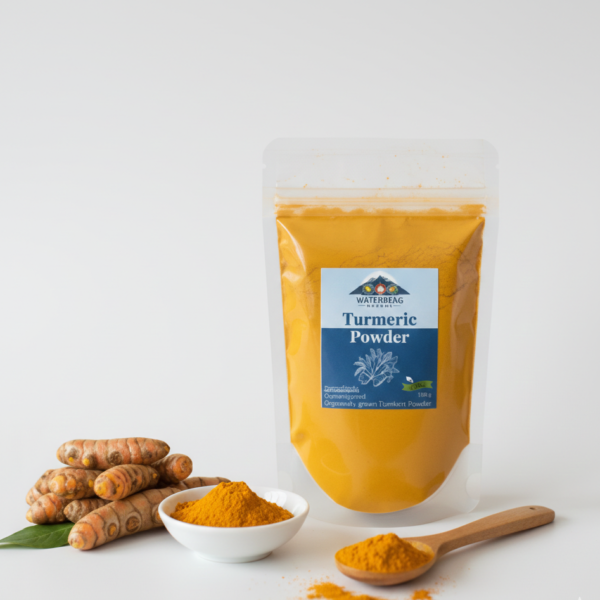
This product oozes with the delectable fragrance of this plant which also has amazing health benefits
