
Welcome, Guest
Login/Register
Our Plants Come with Predators
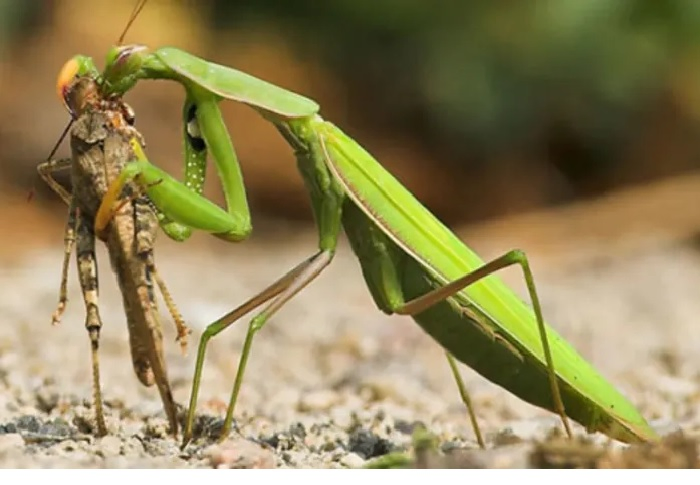
Most people are familiar with ladybugs and praying mantises that feed on other insects in your garden or orchard, but did you know that there are more than 200,000 different predatory insect species? This makes up 25% to 30% of all insects, and they are predatory at some stage of their life cycle.
Perhaps even more fascinating is that less than 1.5% (only about 10,000 to 15,000 species) are considered pests, and only a few hundred can cause serious damage to crops.
So why do pests become such a problem?
If their numbers are so small, why do they cause so much damage?
There are two main reasons:
Monocrop farming creates ideal conditions for pest populations to thrive.
The natural predators are often disrupted by chemical sprays and incorrectly applied organic products.
A mindset shift is required
Here is a real story from our nursery that changed our approach about a decade ago.
We sprayed a chemical pesticide – registered for most berry crops – on a block of our mother stock plants late one afternoon, after our bees had returned to their hives nearby. During the night, unusual weather created a mist that lingered until the following morning.
Because the spray residue never dried, the pesticide remained active on the plants and flowers. When the bees returned the next morning, the entire colony was lost.
That was the last time we used chemical pesticides.
It became the turning point that led us to fully explore biological and organic approaches.
We introduced thousands of beneficial predators targeting specific pests – and to our surprise, it worked. In fact, we transitioned entirely to a biological pest management programme that same year.
Even more interesting:
It was approximately half the cost of chemical programmes
It reduced labour and spraying requirements significantly
Predators continued working naturally, without constant intervention
Many of these beneficial insects can also survive on pollen when pest pressure is low, and they reproduce, continuing the cycle into the next season.
The Solution
1) Build a living defence system
Introduce predators early – prevention is key
Maintain stable populations
Match predator to pest as specifically as possible
2) Increase biodiversity around your crop
Flower strips (alyssum, coriander, lavender, buckwheat, etc.)
Hedgerows or windbreaks
Natural vegetation corridors or cover crops
These provide nectar, pollen, shelter, and overwintering sites for beneficial insects.
3) Use banker plants
Introduce plants that host non-damaging prey
These sustain predator populations when pest pressure is low
This prevents predator populations from collapsing between outbreaks.
4) Reduce disruption (critical)
Most monocrop failures are caused by eliminating beneficial insects.
Avoid broad-spectrum pesticides
Be cautious – some organic sprays can also kill beneficial insects on contact
Use selective or softer products where necessary.
Although most biological/organic pesticides target pests, they are generally harmless to beneficial predators.
5) Monitoring
Monitor crops at least weekly.
Adjust predator populations as needed to reduce plant stress and maintain balance.
6) Use safe, biological sprays where needed
Beneficial bacteria and fungi that target pests
Botanical products, oils, and soaps
These are effective while remaining safe for beneficial organisms
What does this mean for you?
By adopting an Integrated Pest Management (IPM) approach, the plants you receive from us already contain various beneficial organisms – including predatory mites, parasitic wasps, and other beneficial insects (and their eggs).
This means you are not just receiving a plant, but a balanced ecological system already in motion.
We also inoculate roots with more than 10 different strains of beneficial bacteria and fungi to promote growth and protect against disease, but that’s a topic for another newsletter. 😉
Examples of beneficials we use (from partners such as Real IPM, Koppert, BioBee, and Insect Science):
Montdorensis – feeds on mites, thrips, and whitefly
Trichogrammatoidea – targets moths such as False Codling Moth and worms like Armyworm and Bollworm
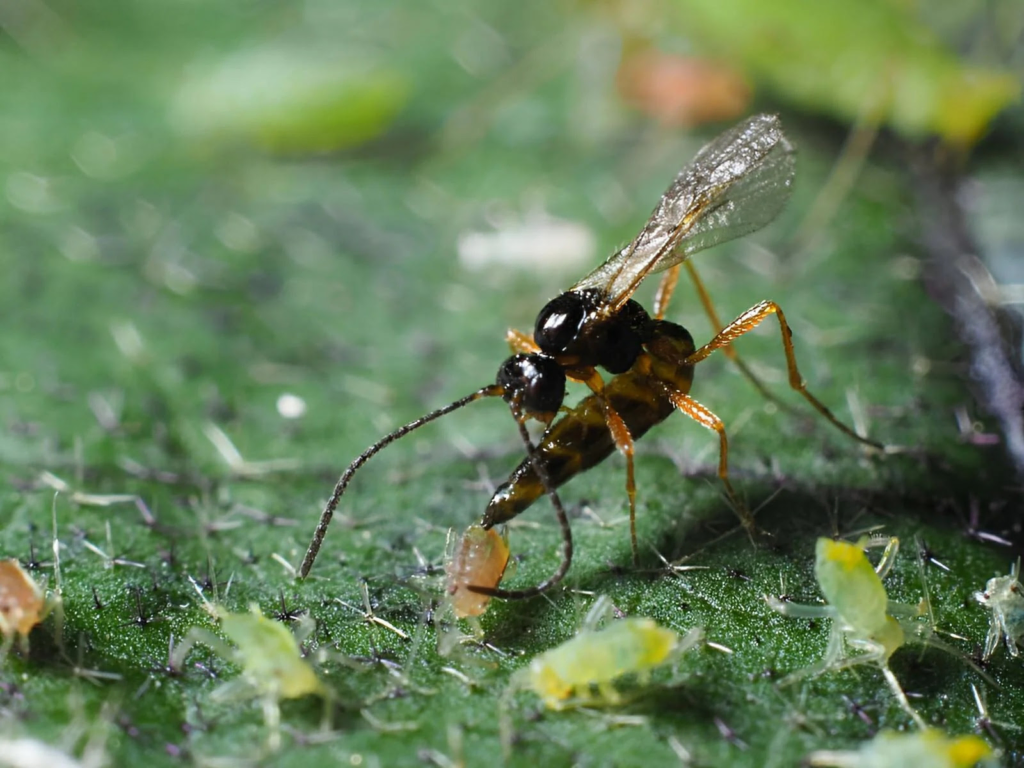
A parasitic wasp lays an egg in an aphid.
A parasitic wasp lays an egg in an aphid.
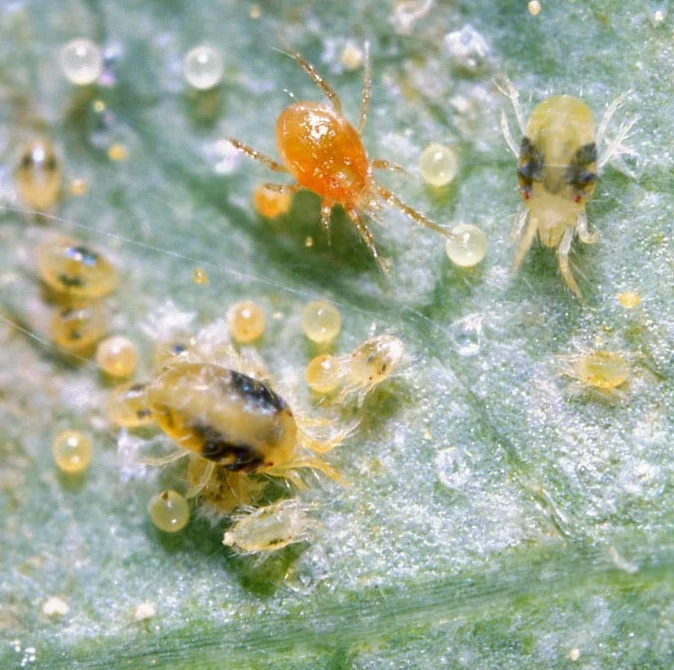
A predatory mite, Persimilis, feeding on two-spotted spider mite and eggs.  Orius feeding on thrips. |
Modern agriculture is shifting
Consumers are demanding cleaner fruit
Retailers are tightening residue limits
Input costs continue to rise
Biological farming is no longer an alternative – it is becoming the standard.
Berries For Africa
Berries For Africa makes berry farming simpler, safer, and more sustainable.
We are more than just a nursery. With over 20 berry types and 60+ cultivars, we offer Africa’s widest selection of berry plants.
We also provide turnkey consultation services, including:
Soil and water testing
Soil correction
Planting systems
Fertiliser programmes
Trellising and hydroponics
Pest and disease management
Pruning and harvesting
Fruit marketing support
If you are interested in growing berries – whether commercially or for home enjoyment – we would love to assist you.
📧 info@berriesforafrica.co.za
📱 +27 84 513 6886 (Call or WhatsApp)
Berries For Africa
