
Welcome, Guest
Login/Register
Flaxseed contains some of the most well-studied anti-cancer, cardioprotective compounds in all of nature. It costs pennies. It grows in the ground. And yet — it remains one of the best-kept secrets in modern medicine. Sayer Ji @sayerjigmi
1/We live in a medical culture that offers statins to 40 million Americans and calls it prevention.
Meanwhile, a seed cultivated for 10,000 years — with hundreds of peer-reviewed studies behind it — sits in the bulk section of your grocery store for $2/lb.
We live in a medical culture that offers statins to forty million Americans and calls it prevention.
That hands chemotherapy to patients whose tumors, by the oncologist’s own admission, may never have caused harm — a phenomenon now documented in the literature under the clinical euphemism of “overdiagnosis.”
That has systematically converted the management of chronic disease into a subscription model, renewed quarterly at the pharmacy.
What it has not offered, with anything approaching equivalent urgency, is this:
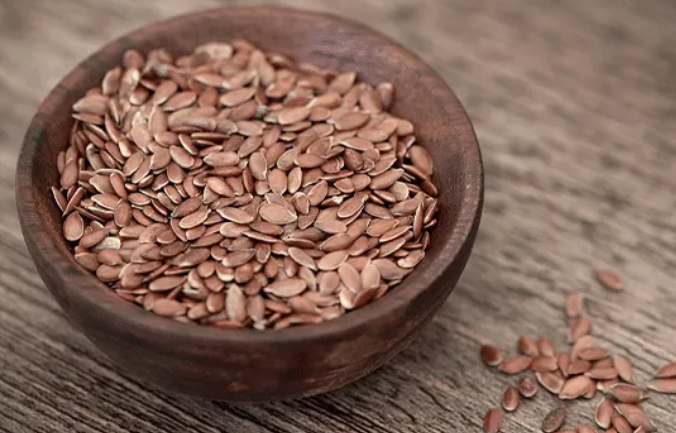
a small, amber-brown seed cultivated for ten thousand years — ground into meal by Mesopotamian physicians, pressed into oil by Egyptian healers, woven into linen by the same hands that built the pyramids.
Linum usitatissimum. The name, translated from Latin, means “most useful flax.” The ancients knew something we have spent a century of industrial medicine actively unlearning.
Not metaphorically. Literally.
What modern science has since confirmed —
across hundreds of peer-reviewed studies, randomized controlled trials, and population analyses —
is that the humble flaxseed contains a pharmacological arsenal that, if it were a patentable molecule synthesized in a Pfizer laboratory, would be heralded as a breakthrough of the century.
Instead, it grows in fields.
It costs less than two dollars a pound.
And it is almost entirely absent from the standard oncology and cardiology protocols practiced in American hospitals today.
This is not an accident. It is a policy.
The Three-Headed Healer
To understand what flaxseed does, you first have to understand what it is. Flaxseed is not a single compound. It is a multicomponent biological system — a category of natural medicine that is fundamentally incompatible with the pharmaceutical model, which demands a single molecule with a single target and a single patent.
Flaxseed contains three classes of bioactives,
each with a distinct therapeutic profile, each reinforcing the others:
Alpha-linolenic acid (ALA) — a plant-based omega-3 fatty acid comprising more than half of flaxseed’s total fat content. This is the same fatty acid family that marine fish oil enthusiasts have spent decades evangelizing — except that flaxseed’s ALA is plant-derived, requires no oceanic harvesting, and in at least one retrospective clinical study of coronary heart disease patients, demonstrated superior reductions in insulin and C-reactive protein compared with fish oil supplementation.
Secoisolariciresinol diglucoside (SDG) — the lignan precursor that makes flaxseed categorically unique. Flaxseed is the richest natural source of lignans — its lignan content is roughly 100 times greater than that of other lignan-containing grains, fruits, and vegetables. Nature When SDG reaches the colon, gut bacteria metabolize it into two mammalian lignan derivatives — enterodiol (END) and enterolactone (ENL) — that circulate systemically and interact with estrogen receptors, cancer signaling pathways, and inflammatory cascades throughout the body.
Soluble and insoluble fiber — comprising roughly 28–40% of the whole seed by weight, feeding the microbiome, regulating blood sugar, reducing LDL cholesterol, and providing the substrate through which the lignan conversion itself occurs. The fiber is not incidental. It is the mechanism.
The documented cardiovascular effects of dietary flaxseed span an antihypertensive action, antiatherogenic effects, cholesterol lowering, anti-inflammatory action, and inhibition of arrhythmias. [Source] That is five distinct cardiovascular benefits from one food.
Name a single drug with that profile — and then ask yourself why the drug is covered by insurance and flaxseed is not.
What the Oncology Literature Actually Says
The cancer research is where things get uncomfortable for the mainstream narrative.
Clinical trials show that 25 grams of flaxseed per day — containing approximately 50 milligrams of lignans, taken for just 32 days — reduces tumor cell proliferation in breast cancer patients.
And lignan supplementation at 50 milligrams per day for one year reduces cancer risk in premenopausal women.
This is not rodent data. This is human clinical data.
In breast cancer research specifically, the picture becomes more nuanced and more stunning in equal measure.
A randomized double-blind placebo-controlled clinical trial found that dietary flaxseed supplementation in women diagnosed with breast cancer reduced tumor proliferation, decreased c-erbB2 expression — a marker associated with aggressive tumor behavior — and increased apoptosis.
The lignans were not mimicking estrogen. They were blocking it.
Flaxseed lignans enterodiol and enterolactone counteracted estradiol-induced growth and angiogenesis in solid tumors — meaning they cut off the blood supply that tumors require to grow.
Not complementary to treatment. Acting against the tumor directly.
A study of 1,250 postmenopausal breast cancer cases and 2,164 controls found that high serum levels of enterolactone were significantly associated with a 35% reduced risk of breast cancer — and this association was strongest for hormone receptor-negative disease, the most aggressive, the hardest to treat, the one that conventional oncology has fewest tools to address.
The prostate cancer data tells a parallel story. In men with localized prostate cancer, 30 grams of flaxseed per day for approximately 30 days increased urinary concentrations of lignans, and these concentrations were significantly associated with reduced tumor expression of Ki-67 — a direct marker of cancer cell proliferation. In men with prostate cancer awaiting surgery, that same 30-gram daily dose over 34 days decreased total testosterone and free androgen levels, and reduced the tumor proliferation index. [Source]
This is food. Growing in fields. Available at your local grocery store.
The Gut Is the Alchemist
Here is what the science reveals that the wellness industry mostly misses:
flaxseed’s power is not in the seed itself. It is in the conversation between the seed and your microbiome.
SDG is inert until it meets the colonic bacteria that metabolize it into ENL and END. Which means flaxseed’s anti-cancer and cardioprotective benefits are, in a deep sense, a product of biological relationship — between plant intelligence and microbial intelligence — that no laboratory can fully replicate or patent.
The gut is not a passive digestive tract. It is an alchemical chamber, performing molecular transformations on plant compounds that your liver cannot do alone.
This is why whole ground flaxseed outperforms isolated lignan supplements in many studies. The fiber matrix, the bacterial substrate, the slow release — these are not delivery inefficiencies. They are features. The plant knew what it was doing.
Source:
https://sayerji.substack.com/p/the-anti-cancer-heart-friendly-seed
Thanks to Jayer Ji
