Welcome, Guest
Login/Register
1 out of 3 Americans suffer from high blood pressure, a precursor to many forms of cardiovascular disease. Researchers believe cinnamon may be a novel and therapeutic approach to the management of high blood pressure
Cinnamon has been used for centuries for its fragrant and flavoring properties, in addition to medicinal benefits.[i] Cinnamon’s reported health benefits include cognition enhancement, antimicrobial and antioxidant properties, anti-inflammatory effects and the prevention of diabetic complications.[ii]
There are four main types of cinnamon, including Ceylon cinnamon (also called true cinnamon), Indonesian cinnamon, Vietnamese cinnamon and cassia cinnamon, with various compounds available from each type and derived from the leaves, bark, fruit and flowers of each plant.[iii],[iv]
Cinnamon’s ability to regulate glucose levels in the body has been one of the main sources of interest for many researchers, but many scientists are also interested in cinnamon’s ability to reduce both diastolic and systolic blood pressure.[v],[vi]
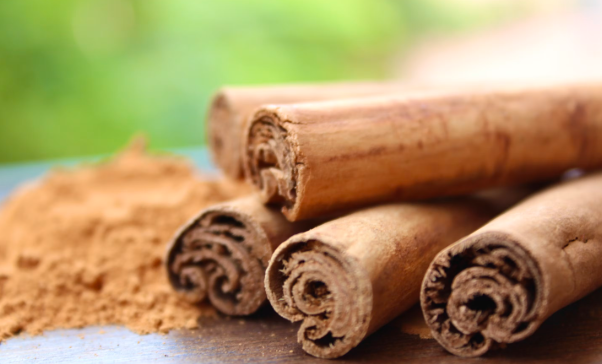
Cinnamon Reduces Systolic and Diastolic Blood Pressure
A study found a significant reduction in both systolic and diastolic blood pressure in adults with high blood pressure after the use of oral cinnamon supplementation.[vii]
It’s not the first study to find cinnamon useful in the control of blood pressure — several studies have produced similar findings in both rats with high blood pressure and subjects with Type 2 diabetes or prediabetes, and researchers have now determined that cinnamon supplements are a possible hypotensive supplement.[viii],[ix],[x],[xi]
Cinnamon’s capability to lower blood pressure seems to stem from its antioxidant and anti-inflammatory properties. Metabolic syndrome, in particular, is often caused by free radicals and oxidative stress, and oxidative stress can also lead to insulin resistance, a precursor of high blood pressure, diabetes and obesity.[xii]
Cinnamon has strong free-radical-scavenging capabilities, as well as 65.3% antioxidant activity thanks to the phenolic compounds found in almost every part of the cinnamon plant.[xiii],[xiv] Additionally, both local inflammation and a rise in pro-inflammatory cytokines are common characteristics of high blood pressure.[xv]
Compounds in cinnamon called trans-cinnamaldehyde and p-cymene produce anti-inflammatory effects by blocking the production of inflammatory biomarkers, effectively stopping inflammation before it occurs and possibly playing a preventative role in the development of high blood pressure.[xvi],[xvii] Given these benefits, it’s no wonder that researchers believe cinnamon may be one natural solution to treating high blood pressure.
Blood Pressure Management Costs US Citizens Billions Each Year
High blood pressure is a significant health problem and a contributing factor to the development of cardiovascular disease, affecting approximately 1 out of 3 adults in the U.S.[xviii],[xix]
Because reducing elevated blood pressure can reduce the risk of heart attack, heart failure and stroke, researchers are eager to find novel and affordable approaches for controlling high blood pressure, and many scientists are looking to natural substances.[xx]
In 2009, the approximate cost of U.S. expenditure on high blood pressure drugs was $15 billion, roughly 10% of the total amount spent on drugs that year.[xxi] However, this drug expenditure doesn’t seem to be leading to any real progress in the reduction of adult blood pressure levels.
Additionally, many of the current drug therapies, while effective, come with adverse side effects and a second medication is often needed to control these side effects. Further, many patients may need two or more high blood pressure drugs to adequately control blood pressure levels.[xxii] It’s no surprise that many patients and physicians alike are eager to find a more affordable and natural solution.
Additional Health Benefits of Cinnamon Supplementation
Beyond its anti-inflammatory and antioxidant properties, cinnamon has been studied for its effects on a myriad of health problems. Benefits of cinnamon include the following:[xxiii],[xxiv]
Cinnamon’s therapeutic potential is vast. For more information about the research being done to study its health benefits, please visit the GreenMedInfo.com research pages on cinnamon and cinnamaldehyde, the primary compound in cinnamon that gives it its flavor and color and boasts numerous health properties.

References
[i] Pharmacognosy Res. 2015 Jun; 7(Suppl 1): S1-S6.
[ii] Pharmacognosy Res. 2015 Jun; 7(Suppl 1): S1-S6.
[iii] Crit Rev Food Sci Nutr. 2011 Jul;51(6):547-62. doi: 10.1080/10408391003699550.
[iv] Pharmacognosy Res. 2015 Jun; 7(Suppl 1): S1-S6.
[v] N Engl J Med. 1993 Jul 29;329(5):304-9.
[vi] Pharmacognosy Res. 2015 Jun; 7(Suppl 1): S1-S6.
[vii] Crit Rev Food Sci Nutr. 2019 Oct 16:1-11. doi: 10.1080/10408398.2019.1678012.
[viii] J Med Food. 2011 Dec;14(12):1505-10. doi: 10.1089/jmf.2010.0300. Epub 2011 Aug 23.
[ix] J Am Coll Nutr. 2006 Apr;25(2):144-50.
[x] Crit Rev Food Sci Nutr. 2019 Oct 16:1-11. doi: 10.1080/10408398.2019.1678012.
[xi] Nutrition. 2013 Oct;29(10):1192-6. doi: 10.1016/j.nut.2013.03.007. Epub 2013 Jul 16.
[xii] J Diabetes Sci Technol. 2010 May; 4(3): 685-693.
[xiii] J Diabetes Sci Technol. 2010 May; 4(3): 685-693.
[xiv] Iran J Basic Med Sci. 2016 Dec; 19(12): 1258-1270.
[xv] Iran J Basic Med Sci. 2016 Dec; 19(12): 1258-1270.
[xvi] Food Funct. 2018 Nov 14;9(11):5950-5964. doi: 10.1039/c8fo01286e.
[xvii] Phytother Res. 2017 Jul; 31(7): 1034-1038.
[xviii] Version 1. F1000Res. 2017; 6: 80.
[xix] Am Health Drug Benefits. 2010 Jan-Feb; 3(1): 47-56
[xx] Version 1. F1000Res. 2017; 6: 80.
[xxi] Am Health Drug Benefits. 2010 Jan-Feb; 3(1): 47-56
[xxii] Am Health Drug Benefits. 2010 Jan-Feb; 3(1): 47-56
[xxiii] Crit Rev Food Sci Nutr. 2010 Oct;50(9):822-34. doi: 10.1080/10408390902773052.
[xxiv] Evid Based Complement Alternat Med. 2014; 2014: 642942.
[xxv] J Tradit Complement Med. 2016 Oct; 6(4): 332-336.
[xxvi] Med Dosw Mikrobiol. 2014;66(2):131-41.
[xxvii] J Adv Pharm Technol Res. 2019 Apr-Jun; 10(2): 63-67
[xxviii] BMC Cancer. 2010 Jul 24;10:392. doi: 10.1186/1471-2407-10-392.
[xxix] J Toxicol. 2018; 2018: 8978731.
[xxx] Neural Regen Res. 2019 Aug; 14(8): 1372-1373.
[xxxi] Adv Exp Med Biol. 2016;929:1-24
Source:

The GMI Research Group (GMIRG) is dedicated to investigating the most important health and environmental issues of the day. Special emphasis will be placed on environmental health. Our focused and deep research will explore the many ways in which the present condition of the human body directly reflects the true state of the ambient environment.
Disclaimer: This article is not intended to provide medical advice, diagnosis or treatment. Views expressed here do not necessarily reflect those of GreenMedInfo or its staff.

Pure Cinnamon Sticks and/or Powder – organic and natural
