
Welcome, Guest
Login/Register
Robert Yoho, MD robertyoho@substack.com
A soil scientist cured his arthritis with a spoonful of laundry booster.
Regulators declared his mineral a poison, and a pen-named researcher finally ran the arithmetic that the nutrition literature had been circling for fifty years.
Borax is 11.3 percent boron.
The whole argument turns on keeping those two numbers apart and on one question the establishment will not answer: what is the actual dose?
The dose-scaling analysis at the center of this piece is the work of the Curious Outlier, drawn from his posts “The Borax ‘Conspiracy’ — Solved” and “How Much Boron is In Borax.” Both are on his Substack and worth reading in full. The rest of the material is from two posts I published about boron several years ago.
Summary
Meet Ms. Boron
Polymath Paul introduced me to Ms. Boron.
Aside from a few functional doctors, almost nobody has met her.
My ankle arthritis had worn me down, so I took her up, and our courtship began out of desperation, with a laundry box rather than science.
Three weeks in, the ankle responded, and I went looking for why.
What I found was a mineral with a wide reach, a soil scientist who cured himself with it, and a regulatory apparatus that turned a nutrient into a poison on paper.
Do not tell her I will ghost her if she stops helping my joints.
If a spoonful of laundry booster fixed my ankle, why did no doctor ever hand me the dose?
The answer winds through a century of buried science, and it is the spine of everything below.
The mainstream figure is a lie of omission.
The regulators made it illegal to recommend the honest number.
The journals printed the evidence and left the arithmetic undone.
By the end, you will see why the working dose ended up buried under so much wreckage, and then I hand it over.
Boron in a starved century
Modern populations are short on minerals that earlier ones took for granted.
Industrial farming, food processing, and regulatory oversight have stripped iodine, magnesium, vitamin K2, boron, and vitamin D from the food supply and the supplement aisle.
The recommended amounts for these nutrients are about 100 times too low, and the units used to express them hide the shortfall.
The unit trick is the tell.
Vitamin D is quoted in international units, making a small dose look enormous. Vitamin K comes in micrograms, which can fool people into thinking they are swallowing a thousand times more than the same amount in milligrams would. Japan recommends 30 milligrams of vitamin K2 a day. The United States recommends 1 to 2 milligrams. Nobody has ever recorded a death from K2 at any dose, and few authorities mention it.
Magnesium tells the same story.
A century ago, people ate about 500 mg a day. Eighty years of processing have cut magnesium in fruits and vegetables by 80 percent, and most people now struggle to reach 200 mg.
Sugar flushes magnesium out through the kidneys, phosphates in soda bind it, and aluminum from cookware, deodorant, baking powder, and every jab cut absorption several-fold. Subclinical magnesium deficiency now drives a long list of chronic diseases.
Iodine was deliberately buried.
When the Midwestern goiter belt swelled the necks of half the population, salt makers iodized their product in 1924, even though no regulation required them to, and goiter fell by 80 percent within a decade. A 2017 study credited iodized salt with raising the IQ of the quarter of the population that had been most deficient. Then a 1948 rat study, dressed up as the Wolff-Chaikoff effect,* frightened doctors away from iodine, and bakers who had fortified bread with potassium iodide switched to bromide, a competing halogen linked to breast and prostate cancer. A protective nutrient was swapped for a carcinogen, and the public was told it was progress. *An autoregulatory phenomenon in which a sudden surge of excess iodine temporarily inhibits the thyroid gland from synthesizing and releasing thyroid hormones.
The boron shortfall is a case study in engineered deficiency.
A diet rich in fruit and vegetables once provided 2 to 5 mg of boron per day. The average intake in developed countries has fallen to 1-2 mg, and institutionalized patients receive as little as 0.25 mg.
Chemical fertilizers block boron uptake from the soil, so an organic apple grown in good soil holds 20 mg of boron, while the same apple grown with fertilizer holds 1 mg.
Discarding the cooking water pours most of the rest down the drain, and gluten damage and Candida overgrowth block what little gets eaten.
Yoho Comment: IODINE
In David Brownstein’s work, iodine in several-hundred-milligram doses reverses breast and other glandular cancers, and replacement doses of 25 to 50 mg a day or more push bromide out of the tissues where it does its damage.
Boron works against fluoride the same way, and there are case reports supporting this.
The halogens compete for the same receptors, so the fix for a poison is often the right dose of the nutrient it displaced.
The pattern beneath it all is that each helpful substance gets reclassified as dangerous, its recommended dose gets cut, a clever unit makes the small dose look big, and a regulatory wall goes up between people and the amount that would help. Every step happened as the industries built on managing chronic disease stood to lose if the population got well. Boron suppression arrived at the same moment arthritis drugs became a profit center. That timing is the argument.
Sit where the money is parked.
The Bank for International Settlements in Basel is shaped like a boot, either the blackest joke in architecture or a confession. Orwell wrote that the future was a boot stamping on a human face forever. The central banks run the planet’s money in secret, accountable only to private shareholders, and they inflate and collapse currencies to tighten the noose. Somewhere in that building,
I picture a basement door with a sign that reads: “Ruin health by suppressing supplements. Boron is on that list.
Yoho Comment:
Yoho’s Law is to never attribute to incompetence what might be due to malice.
Once you have watched the same five-step move run across five different nutrients, the coincidence explanation no longer holds weight.
The scientist they shut down
Rex Newnham developed arthritis in the 1960s while working as a soil and plant scientist in Perth, Western Australia. The drugs did nothing, so he tackled the problem the way he knew, through plant chemistry. He saw that the local soils were mineral-poor, knew that boron drives calcium metabolism in plants, and reasoned it would do the same for him.
He took 30 mg of borax a day, about 3 mg of boron, and in three weeks his pain, swelling, and stiffness were gone.
Yoho Comment:
Keep the two numbers straight here, because the write-ups muddle them. Newnham’s dose was 30 mg of borax, which is about 3 mg of elemental boron.
Some later accounts restate it as 30 mg of boron, which would require 265 mg of borax, a dose almost ninety times larger.
When a source hands you a boron figure, always ask whether it refers to the mineral or the borax that delivers it.
He told public health officials and medical schools. They were not interested. Word of mouth did the work instead, and within five years, he was selling 10,000 bottles a month of tablets he had prepared at a safe dose. Orders outpaced him, so he asked a drug company to market it. That was the mistake. Their people said it would replace pricier drugs and shrink their margins, and their representatives on government health committees pushed through an Australian rule declaring boron and its compounds poisons at any concentration. That killed the spread of the cure, and Australia still throttles boron sales today.
His double-blind trial at the Royal Melbourne Hospital quantified it.
Seventy percent of the boron group improved, compared with 12 percent on placebo.12 Arthritic joints contain only half the boron of healthy ones, and surgeons report that bone from patients taking boron is harder to saw.
Newnham and L.Y. Zhou published a second paper on treating skeletal fluorosis in China. Both boron papers were removed from PubMed and presumably scrubbed. Other trials by the same authors somehow survived.
What the mineral does
Boron is distributed throughout the body, with its highest concentration in the parathyroid glands, followed by bones and dental enamel.
It does for the parathyroids roughly what iodine does for the thyroid. It regulates the absorption and metabolism of calcium, magnesium, and phosphorus, and it keeps the parathyroid from running hot.
Let the parathyroid run hot, which is what boron deficiency does, and it dumps parathyroid hormone, which pulls calcium out of bones and teeth into the blood. That drives osteoporosis, arthritis, and tooth decay on one end, and on the other it salts the soft tissues with calcium, which stiffens muscles and hardens arteries, glands, and kidneys. Boron and magnesium deficiency together are hard on bones and teeth. Boron tells calcium to stay where it belongs.
It reaches beyond bone.
Boron shifts the metabolism of steroid hormones, raising low testosterone in men and estradiol in menopausal women. It also helps convert vitamin D to its active form, so calcium deposits in bone rather than in the walls of arteries.
It feeds the methylation cycle through SAM-e (S-adenosylmethionine) and helps synthesize NAD+ (nicotinamide adenine dinucleotide). It lowers the inflammatory markers hs-CRP (high-sensitivity C-reactive protein) and TNF-alpha (tumor necrosis factor alpha) and raises the antioxidant enzymes SOD (superoxide dismutase), catalase, and glutathione peroxidase. The German cancer researcher Paul-Gerhard Seeger showed that cancer often starts when a cell membrane deteriorates.
Because boron is essential to cell membranes, boron compounds exhibit antitumor activity against prostate, cervical, and lung cancers, as well as lymphoma.
What borax fixes
Arthritis and bone come first because the evidence is oldest and the reports are loudest. Newnham’s trial and the thousands of accounts on the reader boards point the same way: joints loosen, pain drops, and bones harden.
Animal studies show that a month of boron restores bone quality to a level that matches estradiol treatment, and boron deficiency drives a 50 percent jump in urinary calcium loss, straight out of the skeleton.
Hormones are next.
Boron supplementation doubles estradiol in postmenopausal women, matching what hormone replacement delivers, and more than doubles testosterone in both sexes. Younger men aged 29 to 50 showed a one-third rise in free testosterone after a single week on 100 mg of borax a day, which is about 11 mg of boron. The hormone rise comes with no cancer risk, unlike the patented versions.
Fungus is the third front.
Borax hits Candida, ringworm, and other fungi hard, blocks biofilm formation, and prevents harmless yeast from turning into the invasive hyphal form that punches through the gut wall.
Walter Last’s antifungal doses range from an eighth of a teaspoon for light people to half a teaspoon for stubborn cases, taken four or five days a week.
Unlike fluconazole (Diflucan), which requires liver monitoring because it wrecks the liver, boron passes through without accumulating.
Yoho Comment: My search of the current literature found no studies showing that oral boron clears systemic fungal infections, and a recent search reported that fluconazole (Diflucan) outperformed boron as an antifungal. The suppression is real, and papers have vanished, but I will not rely on a study I cannot find. Take the antifungal claim as promising and unproven, not as settled.
Fluoride is the fourth. Boron forms stable complexes with fluoride, pushing it toward the exit. A Chinese study treated 31 patients with skeletal fluorosis with 300 to 1,100 mg of borax per day, with a week off each month over three months, achieving 50 to 80 percent improvement.13 A comprehensive 2015 review sums the rest: boron builds and maintains bone, speeds wound healing, improves the body’s use of estrogen, testosterone, and vitamin D, improves magnesium absorption, sharpens the brain’s electrical activity and short-term memory in elders, and shows preventive and therapeutic effects across several cancers.1
The longer list
Bone, hormones, fungus, and fluoride are the headline uses, but the reader boards and the older literature run longer. A diluted borax solution treats eczema, psoriasis, and acne on the skin, and it soothes irritated eyes and mild conjunctivitis. Gargling reduces oral acidity and fights the bugs behind swollen gums and bad breath. On a wound, its antimicrobial and anti-inflammatory actions guard against infection and speed healing. For vaginal yeast, a gelatin capsule of borax powder taken at bedtime for one to two weeks beats the drugstore antifungals and works against drug-resistant Candida strains. For a urinary tract infection, an eighth to a quarter teaspoon in water alkalizes the urine and starves the bacteria.
It reaches beyond the body, too. Borax clears mange in dogs and cats and kills lice and mites by drying them out. As a shampoo, it helps with chronic scalp conditions, and in the bath with Epsom salts, it pulls aluminum and hardens bone. None of this requires a prescription, and the whole program costs less than a single copay.
Yoho Comment: Polymath Paul keeps field notes. He drops a pinch of borax into a water bottle daily and adds it to his bath with Epsom salts to remove aluminum and improve skin, heat tolerance, and bone hardness. He says boron and magnesium together outperform most anti-inflammatory drugs for arthritis, and that Israelis get almost no arthritis because their soil is rich in boron. He thinks aging is mostly due to immune decline, which lets free iron and calcium pile up in the tissues, and that boron tells calcium to stay in the bone where it belongs.
Is it toxic?
Not by the numbers
The LD50, the dose that kills half of a test group, is 4,500 to 6,000 mg per kilogram for borax and 3,000 mg per kilogram for table salt. By the standard yardstick, that makes salt 50 to 100 percent more toxic than borax. Table salt is also mutagenic and damages genes. Borax shows no such effect.
The human record supports the animal data. A review of 784 accidental poisonings involving 10 to 88 grams of boric acid recorded zero deaths, and 88 percent of the cases showed no symptoms at all. Those are enormous amounts, tens of grams, swallowed by accident, with nobody dying. The therapeutic dose is a fraction of a teaspoon.
The reproductive scare that justifies every ban falls apart under scrutiny. A three-generation rat study found no reproductive toxicity at a level equivalent to 17 grams of borax a day for a human, several tablespoons, every day, for life. Reproductive effects in rodents appeared only at doses equivalent to 15 to 30 grams a day for a 60-kilogram person, which is 100 times any therapeutic amount. No human study has ever shown the harm the labels warn about.
Yoho Comment: Borax is so safe that I am unsure why anyone measures it. You never weigh the salt you shake on your eggs. The fear is manufactured, and it is why the honest dose lives behind a wall of warnings instead of on the side of the box.
The arithmetic nobody published
This section rests on the work of the Curious Outlier, who spent about 100 hours reading across a century of boron literature and then performed the one calculation everyone else had skirted. What follows is his analysis, presented as his own, because it is the strongest case in print that the honest dose sits far above the official ceiling.
Here is the sentence that opened his eyes, buried in a peer-reviewed paper that most readers would scroll past.
Boron at 5, 10, and 20 mg per kilogram per day reversed oxidative stress, lipid damage, and the collapse of antioxidant defenses induced by the pesticide malathion in rats, and regenerated damaged liver, kidney, and brain tissue. Oxidative stress drives aging, neurodegeneration, kidney disease, and liver damage. The antioxidant enzymes it restored are the body’s front-line defense. And the dose was left as an animal number, never translated into a human dose. That language is everywhere in the boron literature.
Boron affects nearly every system a person would want to optimize, including brain activity and memory, bone and fracture healing, the methylation cycle, steroid hormones and vitamin D, immune function, prostate cancer risk and PSA, lipids, blood glucose, wound healing, and mitochondrial function. In case after case, the paper reports the effective animal dose in milligrams per kilogram and then stops, one step short of the number a reader needs.
The scientists cannot say the obvious out loud. Boron has no essential-nutrient status because proving essentiality requires showing that one enzyme fails without it, and boron does not work that way. It behaves like a conductor adjusting tempo across the whole orchestra, not a single musician whose silence stops the music. Without essential status, no regulator will set a meaningful intake. The upper limit of 20 mg a day, drawn from rat and rabbit reproductive toxicity, then bars any researcher from recommending more without human trials that nobody funds, because boron cannot be patented and there is no commercial engine to pay for them.
So the honest researchers do something elegant. They publish the animal milligram-per-kilogram data in full, include it in papers aimed at human nutrition, place it in human-relevant context, and leave the conversion to whoever is paying attention. The USDA’s Forrest Nielsen spent a career arguing that boron is more important to human nutrition than anyone officially admits, which is the literature’s way of stating the obvious without saying it.
Now, the two ways of doing the math are the whole scandal. The safety ceiling was built with an uncertainty factor. Researchers take the highest animal dose that caused no harm, then divide by 10 because animals are not humans, then divide by 10 again because some humans are more sensitive than others. That is a 100-fold reduction. For boron, some assessments used cushions up to 247 times smaller than the no-harm dose.9 That method answers only one question: how far below any risk do we hide?
The other method, allometric scaling, answers the useful question: what human dose reproduces the beneficial animal effect? The FDA uses it every day to set the first human dose of a new drug. It converts doses by body surface area, using species factors, called Km values, of 6 for the rat and 37 for the human. Run a beneficial rat dose through it, and you get a human-equivalent dose. Nobody had ever run the beneficial boron doses through this method, only the toxic ones.6
Run his conversion, and the numbers are hard to look away from. The 5 mg-per-kilogram rat dose that regenerated liver, kidney, and brain tissue converts to 56.8 mg a day for a 70-kilogram adult. Across nine body-weight studies, the human-equivalent doses span 9.6 to 113.5 mg a day, with a median of 51.1 mg. The average American eats about 1 to 1.35 mg. The typical supplement gives 3 to 10 mg. The upper limit is 20 mg. The effective range starts near the upper limit and climbs to almost six times that level, and the upper limit falls below the effective dose for eight of the nine systems studied.
The contradiction has never been addressed in print. The ceiling was set at one-hundredth of the dose that harmed nothing in animals. The beneficial doses, run through the same conversion, land at 10 to 113 mg a day. A brand-new drug of unknown risk enters human trials with a tenfold safety margin. Boron, which humans have eaten throughout human history, was buried under a margin up to 25 times larger. As the Curious Outlier puts it, “the drug we understand less gets treated with more trust” than a mineral eaten throughout human history.
This is an institutional machine, built from regulatory classification, funding gaps, fear of liability, and the slow inertia of a cautious field, and it produced a blind spot the size of a mountain. The milligram-per-kilogram figures appear in every paper. As the Curious Outlier puts it, “the math simply hasn’t been done in public.” Most Westerners take boron at 2 to 3 percent of the dose associated with measurable benefit, using the same animal literature the field itself cites as its evidence base.
The campaign to bury it
The regulatory record reads like a coordinated demolition. In December 2010, the European Union banned borax and boric acid from public sale, classified them as Reprotoxic Category 2 despite a lack of human evidence of reproductive harm, and ordered the skull-and-crossbones symbol on the package. Canada tightened the same way.14 Germany enforces borax controls strictly, while some EU countries shrug and ignore the ban. In the United States, Orrin Hatch’s 1994 supplement law is the reason boron is sold at all.15
The censorship ran alongside the bans. Walter Last’s article, the one that laid all this out, disappeared from mainstream search results and medical databases between 2012 and 2015, as pressure on the information platforms mounted. Newnham’s positive arthritis studies were delisted from PubMed despite meeting publication standards. Search algorithms now push toxicity warnings to the top and the health benefits to the bottom, for a compound safer than the salt in the shaker.
The conflicts of interest are documented. A 2012 European Court of Auditors investigation found that many experts at the European Chemicals Agency, the body that polices chemical safety, were employees or shareholders of the companies whose products they judged, and that the drug industry feeds data directly into the agency’s databases through its trade federation. The agency that branded boron reprotoxic was staffed, in part, by the industry it was supposed to check.
The motive is not hidden either. Arthritis and osteoporosis affect about 30 percent of people in developed countries, and osteoporosis fills more profitable long-term hospital beds than any other disease. A cheap boron-and-magnesium fix would vaporize revenue from arthritis drugs, osteoporosis treatments, joint replacements, and years of fracture care. When most research funding flows from Pharma, the studies that would prove boron are starved, and what survives comes from Turkey, China, and smaller institutions with less industry pull. The missing large-scale trials are not an oversight. They are the point.
What to buy, what to skip
Buy the box with the mules and the stagecoach on it. Twenty Mule Team Borax costs about 6 dollars for a four-pound box, and a half teaspoon lasts for years. All borax is the same, whether mined in California or Turkey, and no food-grade version exists or is needed. Technical and agricultural grades run at 99 to 99.5 percent purity, with trace amounts of sodium and mineral salts and no heavy metals. Pharmaceutical grade is no purer.
Box 20 mule team borax hi-res stock photography and images …
Skip the health-store boron. The glycinate, citrate, and calcium fructoborate on those shelves bind boron to organic molecules, making it less reactive and, for the therapeutic effects that matter, less useful. Ionic forms like borax and boric acid dissociate in water and release free boron that goes straight to work on cell membranes and fungal walls. Every arthritis, hormone, and antifungal result in the literature used ionic boron, not the chelated capsules. So the whole cost of entry is a six-dollar box and a glass of water. The only thing missing is the number of teaspoons, and that is the one thing the establishment guards.
How strong is each claim
Strong evidence supports the bone and hormonal effects and the antifungal action across multiple studies. The arthritis case has thinner but real clinical data, led by the Royal Melbourne trial and thousands of overnight-cure reports that read as credible. Cognitive benefit and detoxification remain preliminary, promising, and short of proof. The claim that borax cures cancer remains unproven, though the lab work and case reports point somewhere. The antifungal reach into systemic infection is the weakest link of all, because the studies that would settle it have either vanished or never existed. Label the soft claims, and the hard ones stand up straighter. That labeling is armor, not retreat.
References
Additional sources
These inform the argument without supporting a single sentence.
Source Link:
Boron is tremendously v
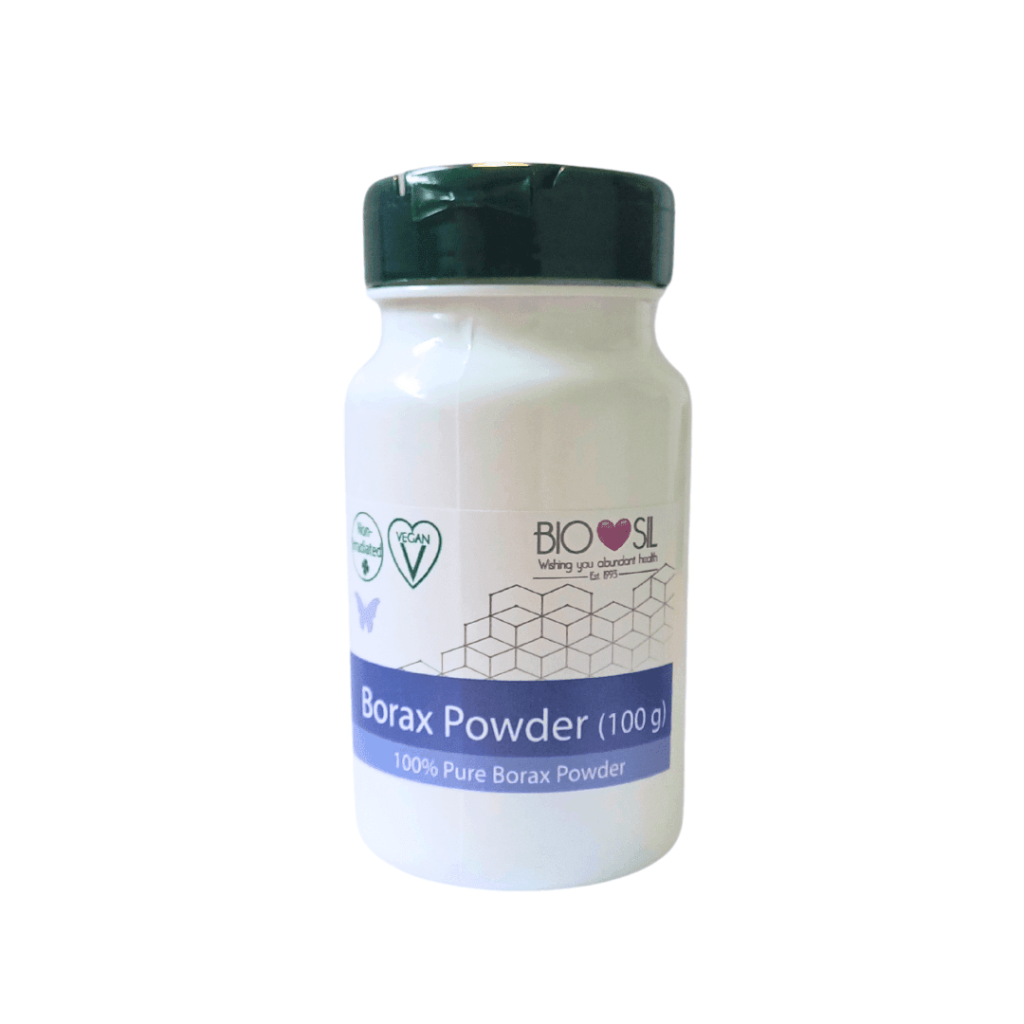
Borax is an increasingly popular natural remedy for a whole host of health issues for humans and pets
Commonly used as a natural cleaning agent, Borax’s reported number of successful treatments and health benefits are extensive.
Additionally, this remedy is as simple as a pinch in a glass of water or your cup of coffee …… and is also inexpensive
Strengthen and whiten teeth plus many other benefits
