Welcome, Guest
Login/Register
The Nature’s Lost Vault Book Is Now Available. Learn more: https://naturelostvault.com/book.html
The Lawn Weed Herbicide Companies Spent $9 Billion to Kill:
It Fixes Nitrogen for Free.
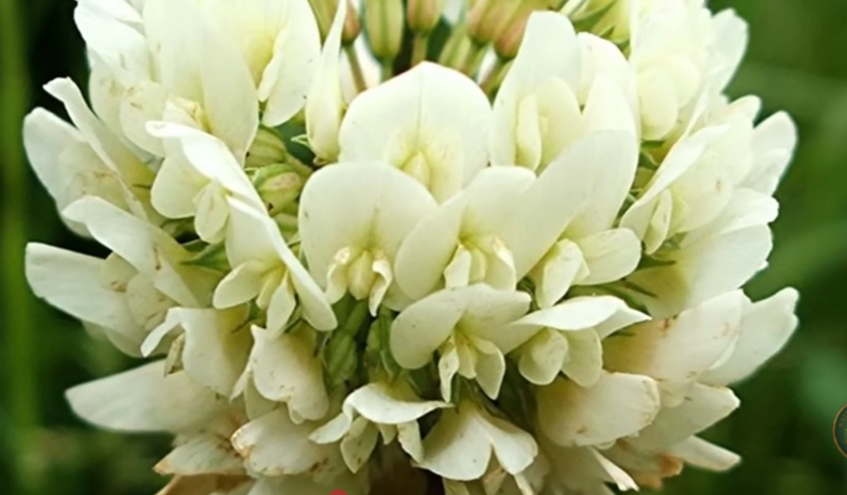
There’s a plant growing in your yard right now that creates its own fertilizer, feeds livestock better than grass, stays green through droughts, and requires zero maintenance.
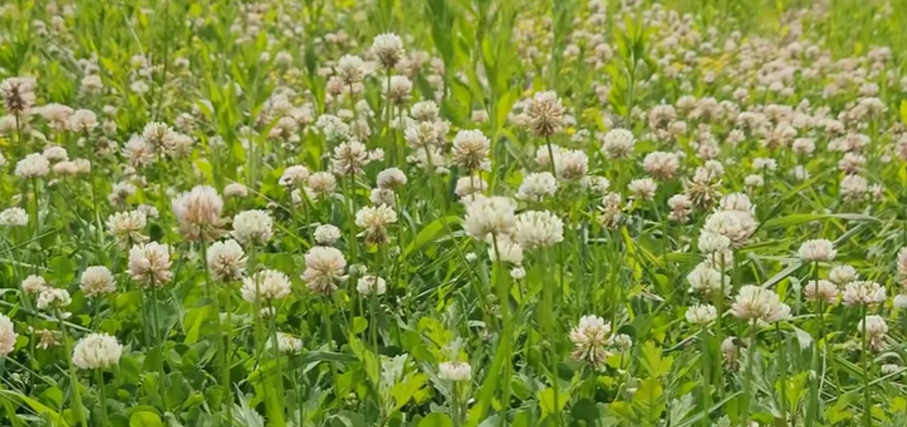
Before 1950, American homeowners deliberately planted it in their lawns. Then Scotts Chemical invented broadleaf herbicides, and suddenly this nitrogen-fixing miracle became a “weed problem.”
This is the story of white clover (Trifolium repens), the free fertilizer factory that threatens a $60 billion industry, and why chemical companies convinced three generations of Americans to poison what their grandparents cultivated.
THE SCIENCE: White clover has been cultivated as a forage crop since the 1600s in Europe, brought to North America by colonists specifically for lawns and livestock pasture. Pre-1945 American lawn seed mixtures routinely contained 5-20% white clover by weight. The USDA classified it as a beneficial lawn component until the 1950s. Nitrogen fixation capacity: White clover establishes symbiotic relationships with Rhizobium bacteria, fixing 40-200 kg of atmospheric nitrogen per hectare per year (Carlsson & Huss-Danell, 2003). This is equivalent to 36-180 pounds of synthetic nitrogen fertilizer valued at $150-600 per acre annually at 2024 prices.
A 15-year study at the University of Vermont (1995-2010) comparing pure grass lawns to grass-clover mixtures found clover lawns required 80% less synthetic fertilizer, 50% less water, and maintained superior green color during drought (Claessens et al., 2010). Livestock benefits documented by the University of Missouri Extension Service: Dairy cows grazing white clover pastures produce 15-25% more milk with higher protein content compared to pure grass pastures. Sheep on clover gain 20-30% more weight. White clover prevents bloat more effectively than alfalfa due to lower initial digestion rates (Ball et al., 2007). Drought tolerance: White clover’s deep taproot (30-60cm) accesses water unavailable to shallow-rooted turfgrass. During the 2012 Midwest drought, University of Nebraska research showed clover remained green while Kentucky bluegrass entered dormancy (Sarath et al., 2014). Pollinator support: White clover provides continuous nectar flow May-September when most other plants aren’t blooming. A Cornell University study found lawns with 10% clover supported 5X more pollinator species than pure grass lawns (Matteson et al., 2012).
THE SUPPRESSION: The global herbicide market reached $40 billion in 2024, with the US lawn care segment worth $9.4 billion annually. Scotts Miracle-Gro controls approximately 30% of the North American lawn care market. The business model shift occurred 1945-1960. In 1944, the USDA promoted white clover for lawns. By 1946, O.M. Scott & Sons Company began marketing broadleaf herbicides containing 2,4-D (developed as a chemical weapon during WWII). Marketing materials from the 1950s rebranded clover as a “weed” and “lawn contaminant.” Chemlawn Corporation (founded 1968, later acquired by TruGreen) built a $1 billion business model on subscription herbicide applications targeting clover and other broadleaf plants. The economic threat is explicit: a homeowner with a clover lawn purchases zero nitrogen fertilizer ($200-600 annual savings), zero broadleaf herbicides ($40-120 annual savings), and reduces water consumption by half ($100-300 annual savings). Multiplied across 40 million US lawns, this represents $13-40 billion in eliminated annual revenue.
SOURCES:
DISCLAIMER: This channel provides educational and historical information. Always consult professionals before making changes to your property. Some HOA regulations prohibit clover lawns.