Welcome, Guest
Login/Register
R695.00
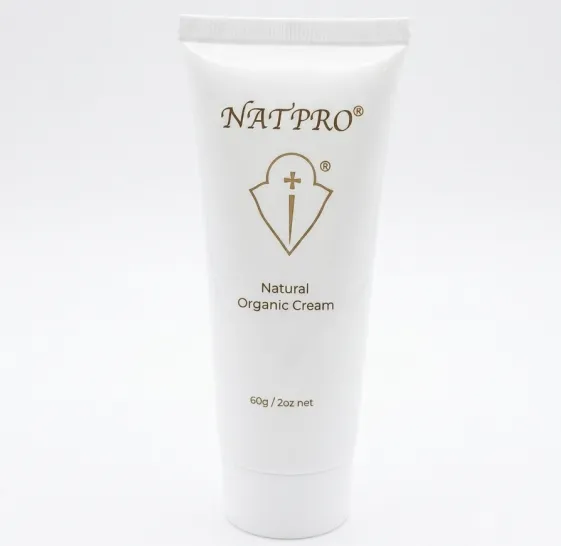
Progesterone Cream
Natpro 60 gm Tube:
2000 mg progesterone per 60gm tube
166 mg progesterone per 5ml = 1tsp
1 ml contains 33.3 mg progesterone
Contents:
De-ionised water, Caprylic/capric triglyeride, natural progesterone 2000 mg, Cetearyl olivate, Sorbitan olivate, Populus tremuloides (Aspen bark extract), Di-alpha tocopherol (Vitamin E)
Free from animal deriatives, added fragrance, mineral oils, colorants, not tested on animals, pH balanced
Progesterone Cream: Overview & Therapeutic Benefits:
Progesterone is a natural steroid hormone found in much higher concentrations in women than men. In the female body, it operates harmoniously with estrogen and other steroid hormones to regulate vital physiological functions, such as managing the menstrual cycle and preparing the uterine lining for the implantation of a fertilized egg.
Unlike synthetic alternatives, natural progesterone cream is an over-the-counter topical product used to ease peri-menopausal and menopausal symptoms, balance hormonal shifts, improve sleep quality, reduce anxiety, and support overall cellular health.
The Wide Spectrum of Natural Progesterone Applications:
Because progesterone plays a foundational role in cellular, neurological, and endocrine health, natural progesterone therapy can be effective in treating a wide range of health conditions, including:
Key Roles of Progesterone in the Body:
As a versatile precursor to other essential steroid hormones—including cortisol, testosterone, and estrogens (estriol, estradiol, and estrone)—progesterone carries out several critical functions:
Major Benefits of Topical Progesterone Cream:
Application of progesterone cream serves as a form of natural hormone replacement therapy (HRT) to restore physiological balance:
Natural Bio-identical Progesterone vs. Synthetic Progestins:
A critical distinction must be made between natural bioidentical progesterone and synthetic progestins (or progestogens).
Natural Progesterone:
Natural bioidentical progesterone is identical in molecular structure to the hormone produced by the human body. Because of this exact fit, the natural hormone has no toxic side effects when used properly to restore physiological balance.
Further information:
“What is it?”
First of all its a hormone that has been around for about 500 million years. That makes it the oldest hormone.
Why is this important?
Because it shows how vital it is to the lives of a great many creatures on the planet.
It is essential to all vertebrates… fishes, reptiles, birds and mammals… including humans.
It has countless functions in both sexes and all ages… regulating blood sugar, developing intelligence, building bones, brain activity and many more.
This vital hormone plays a major role in the body. It is not exclusively a female hormone nor is it a ‘sex’ hormone. It plays no part in the secondary sexual characteristics which develop at puberty. It is the precursor to the sex hormones oestrogen and testosterone.
It is secreted primarily by the ovaries in females and the testes in men. Smaller amounts are produced by the adrenal glands, the brain and glial cells in both sexes.
There are no great quantitative differences between men and women (at least outside the luteal phase).
William Allen and George Corner first isolated ‘Progestational Steroidal Ketone’ (these are the words that fully describe the hormone and which are the source of its commonly used name) in 1934 and proposed the name because of its “progestational” activity in the pregnant female. This was an unfortunate choice of name as it has now come to be regarded as a ‘female’ sex hormone, and it’s many other roles having been largely forgotten.
It was not until 1943 that Russell Marker made progesterone from the plant steroid diosgenin. Originally he used the Mexican wild yam (dioscorea villosa) as a source plant. However, diosgenin has now been found in many other plants, including the spice fenugreek and the soya bean.
Once it was established that it could be produced like this biochemists began converting it into other hormones. These include cortisone, testosterone, estrogen and of course the unnatural ‘progestins’ or ‘progestogens’ that masquerade as the real, natural hormone.
There is much confusion in the minds of both the public and the professions between progesterone on the one hand, and the progestins or progestogens and “yam extracts” on the other.
Let me clear the confusion for you.
Progesterone is made in your body from cholesterol. Here are the essentials of the process…
See this document for added clarity… Steroidgenesis Pathway
This is the vital point to understand…
“progesterone is an essential raw material from which your
body makes many of the other hormones vital for good health”
It’s this simple fact that helps anyone appreciate just how wide ranging the effects of a deficiency can be.
This is why progesterone therapy can be effective in treating such a wide range of health problems, from…
…and many more.
The “natural” hormone your body makes has a unique molecular structure. Here’s what it looks like…

The synthetic progestins and progestogens on the other hand have an altered molecular structure. Here’s what they look like…

Spot the difference? They may look similar to the real thing… just as ivy and spinach are both green and leafy (ivy quiche anyone?).
