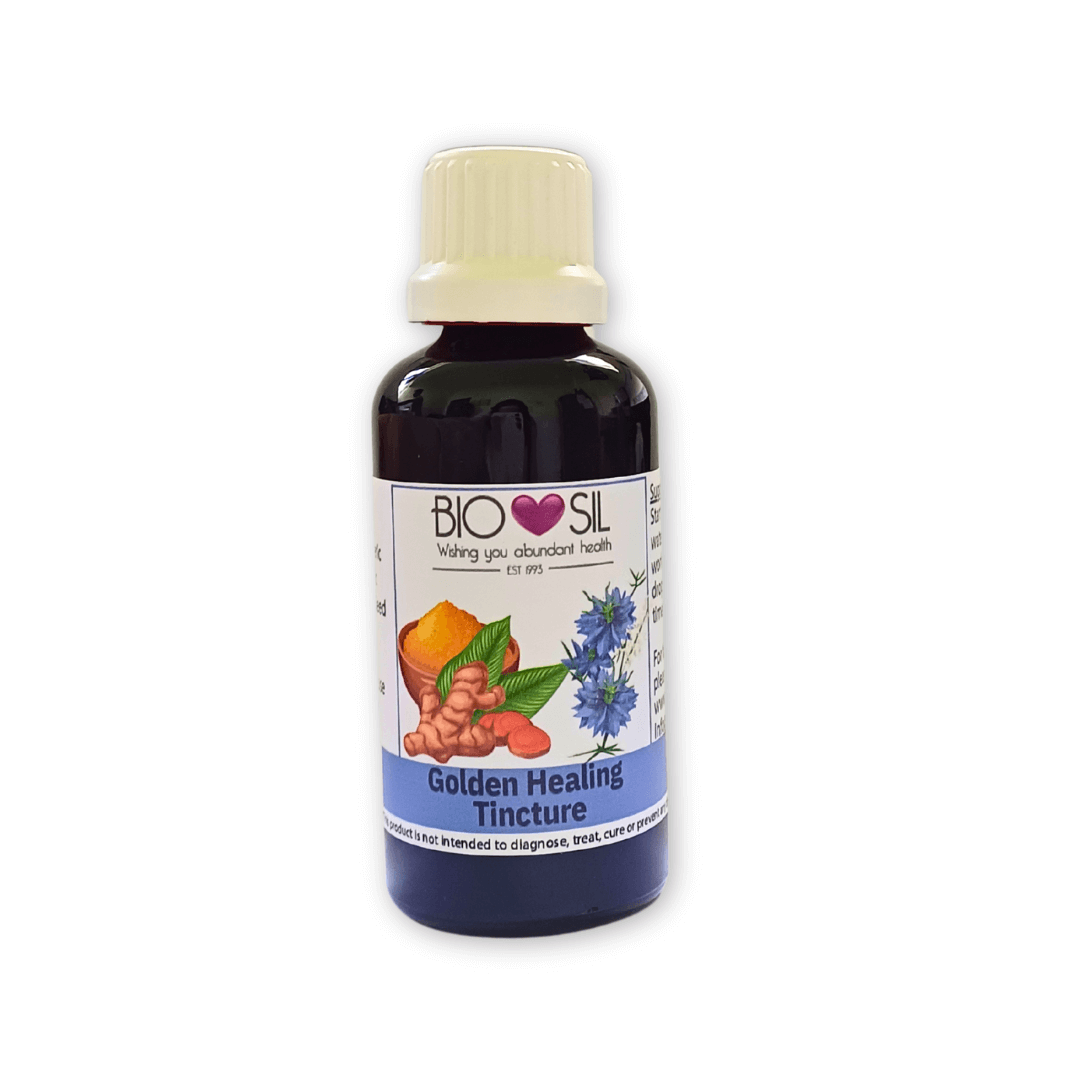
Golden Healing Tincture
Contents: 50 ml
1. Black Cumin Seed – 33%
2. Black Turmeric – 33%
3. Golden Turmeric – 33%
4. Piperine – 1% to enhance bio-availability of nutrients
These nutrients are organically grown and cultivated, free from any form of pesticides / chemicals
Not irradiated
Benefits:
Known to be an immune system booster and an aid for inflammation
Doubled benefits with both Golden Turmeric and Black Turmeric and even further benefits with Black Cumin Seed and Piperine
Suggested dosage:
Shake well before use
Start with 3 drops in pure water and gradiently, at your own comfortable pace, work up to
10 – 20 drops in pure water 1-3 times a day.
……….
Black Cumin Seed benefits:
This nutrient-rich plant has been used for thousands of years, and its incredible health-promoting properties are supported by modern research. Black seeds come from Nigella Sativa, a small plant with pale purple, blue or white flowers. They are also known as black caraway, black cumin, kalonji and black onion seeds.
Black seed oil contains thymoquinone, which is an anti-oxidant and anti-inflammatory compound.
Found to improve lung function and respiratory rate and many other health issues.
Turmeric benefits: Dr Axe
Turmeric is a golden root in the ginger family whose main compound, curcumin, lowers inflammation through several pathways, including some that anti-inflammatory drugs target.
Its best-supported use is knee osteoarthritis pain, followed by lower inflammation markers, with smaller trials in indigestion, mood and blood sugar.
Food and supplements aren’t the same dose:
a teaspoon of the spice holds about 90 mg of curcumin, while most trials used 1,000 mg or more of a concentrated extract.
Cook with it daily alongside black pepper and a little fat, and take any supplement with meals.
Please note:
Concentrated supplements aren’t right for people with gallstones, kidney stones or liver disease, or during pregnancy, and they need a plan with your prescriber if you take a blood thinner or diabetes medication.
- May help: knee osteoarthritis pain, inflammation, indigestion, mood and blood sugar
- In food: about ½ to 1 teaspoon a day, with black pepper and a little fat
- Supplements studied: 500 to 2,000 mg a day of turmeric extract or curcumin, less for enhanced-absorption forms
- Be careful with: gallstones, kidney stones, liver disease, pregnancy, blood thinners
……..
Further information on the two different Turmerics:
A. Introduction to Black Turmeric
Now, let’s shift our spotlight to the dark gem of the turmeric world—Black Turmeric, also known as Curcuma caesia. It’s like the mysterious sister you didn’t know you had. Unlike its yellow counterpart, Black Turmeric doesn’t often get the recognition it deserves.
What sets it apart is its mesmerizing blue-green color—a stark contrast to the familiar golden hue of Yellow Turmeric.
B. Nutritional Profile and Benefits
Here’s where it gets interesting. Black Turmeric isn’t just a pretty face; it’s got some unique tricks up its sleeve. Its nutritional profile boasts a host of compounds that set it apart from Yellow Turmeric. We’re talking notable levels of tannins, elemene, bornyl acetate, and many more.
Tannins in moderation may offer some health benefits. They have antioxidant properties and can help protect cells from oxidative damage. Additionally, they have been studied for potential antimicrobial and anti-inflammatory effects.
Elemene has been studied for various health benefits, including potential anti-inflammatory, anti-cancer, and anti-microbial properties. Elemene derived from turmeric is approved in China for the treatment of cancer, according to some research.
Bornyl acetate is often used in aromatherapy to create a calming and grounding atmosphere. Its scent is associated with relaxation and stress relief. It is also sometimes used in products like chest rubs and inhalers for its potential benefits in supporting respiratory health and easing congestion.
Bornyl acetate has been studied for its anti-inflammatory and antibacterial properties, which may be useful in skincare for soothing irritated skin. In traditional medicine, it has been used for its potential analgesic (pain-relieving) properties, especially for muscle and joint pain.
Together, these compounds give Black Turmeric its distinct advantages in areas like skincare and antioxidant power. We’ll get into the nitty-gritty of that soon, but for now, just know that it’s no ordinary spice.
So, there you have it—the friendly rivalry between Black Turmeric and Yellow Turmeric. Both have their own unique charms and benefits. Yellow Turmeric is better suited for cuisine and Black Turmeric is known more for its medicinal properties. Whether you’re whipping up a tasty curry, crafting a skincare routine, or simply curious about the world of spices, these turmeric varieties have something special to offer.
Remember, it’s not about which one is the ultimate winner; it’s about how they can complement your journey to a healthier, happier you. So, go ahead, embrace the power of turmeric, and let your taste buds and wellness goals be your guide.
May your spice rack be ever vibrant and your journey to wellness ever colorful
…………
A. Introduction to Yellow Turmeric
First off, let’s meet the reigning champ, Yellow Turmeric, scientifically known as Curcuma longa. If you’ve ever had a curry or a cup of golden milk, you’ve experienced its magic. Yellow Turmeric has a rich history, steeped in the traditions of Ayurveda and various cultural cuisines.
Yellow Turmeric has been used for so many purposes—from spicing up her dishes to soothing a sore throat. It’s been a trusted companion in many households for generations.
B. Nutritional Profile and Benefits
Yellow Turmeric’s claim to fame lies in its curcumin content. Curcumin is like the superstar compound that packs a punch in the health department. It’s known for its anti-inflammatory and antioxidant properties, making it a sought-after ingredient for promoting overall well-being.
So, whether you’ve been sipping on a turmeric latte or adding a pinch to your stir-fries, you’re reaping the benefits of this fantastic spice.
Gratitude for this info:
https://newuniversefood.com/blogs/news/black-turmeric-vs-yellow-turmeric-
.
 Probiotic - Gut Fix Semosis
R194.001 × R194.00
 Bladder Assist Tincture
R104.001 × R104.00
 Apple Cider Vinegar 500 ml
R105.001 × R105.00
 Herbs & Spices: Beetroot Powder
R88.001 × R88.00