
Welcome, Guest
Login/Register
FDA: “Chlorine dioxide is Toxic” – Debunked
A Primary-Data Audit of the Regulatory Narrative
by Andreas Kalcker : October 2026
I read every adverse-event report the FDA holds on chlorine dioxide and sodium chlorite.
All twenty-four.
Here is what the data supports, what it does not, and where my own side gets it wrong too
Andreas L. Kalcker
Abstract
For six years, regulators and the press have described aqueous chlorine dioxide as “bleach” and asserted that drinking it causes severe injury and death. This claim rests, in the public record, on press releases rather than on the primary pharmacovigilance data.
This article audits all that data. I retrieved all 24 reports in the FDA Adverse Event Reporting System (FAERS) indexed to “chlorine dioxide” (n=8) and “sodium chlorite” (n=16), reviewed each individually against three criteria — recorded dose, chemical identification of the ingested substance, and plausibility of attribution — and then applied the same criteria to the peer-reviewed case reports with laboratory confirmation.
The findings:
the FAERS corpus contains no verified death, no methemoglobinemia, no recorded dose, and no substance verification; the serious published cases all involve concentrated product ( 25–28% ), undiluted ingestion, intravenous administration, or domestic accidents. I also state plainly, against my own interest, which parts of my position the evidence does not support. The conclusion is narrow and defensible: the regulatory narrative is not supported by the data it claims to rest on.
Why This Audit Exists
I have been called a charlatan, a cult leader, and worse. That is the cost of the work and I accept it. What I have never accepted is being refuted with a document nobody read.
Here is a fact that should embarrass an entire profession:
the FDA’s warnings about chlorine dioxide cite adverse-event reports. Those reports are public. They are queryable by anyone with a browser and ninety seconds.
In six years, I have not found a single journalist, fact-checker, or regulator who published an audit of them. They cite the press release, which cites the reports. The chain terminates there, unexamined.
So I examined it. This article is the result — with the methods written out, the queries reproducible, the case identifiers given, and a section at the end listing everything I cannot claim.
If you are a skeptic, I am not asking you to trust me. I am asking you to run the queries yourself.
That is the difference between skepticism and faith.
Methods
Data source. Oopen FDA Drug Adverse Event API (api.fda.gov/drug/event.json), the public interface to FAERS, the FDA’s spontaneous reporting system. Queries executed 18 October 2026:
patient.drug.openfda.generic_name:”Chlorine dioxide” → 8 reports
patient.drug.openfda.generic_name:”Sodium chlorite” → 16 reports
Assessment criteria
Each report was assessed on three axes, the standard ones in clinical toxicology:
1.Dose. Is a dose, concentration, or volume recorded? Toxicology without dose is not toxicology — it is paperwork.

2.Substance. Is the ingested chemical identified? Sodium hypochlorite (NaClO), sodium chlorite (NaClO2) and chlorine dioxide (ClO2) are three distinct species with different redox chemistry and different toxicology.

3.Attribution. Given the co-reported medications and the recorded reaction profile, is the product a plausible cause, one confounded candidate among several, or clearly irrelevant?
Secondary source set
Peer-reviewed case reports and case series with laboratory data, plus the ATSDR toxicological profile (TP-160) and the US EPA human volunteer studies, examined under the same criteria.
Limitation declared up front
openFDA does not return case narratives, only structured fields. I therefore assessed dates, ages, co-medications, reactions, seriousness and outcome flags , not the unstructured clinical story. Spontaneous reporting systems undercount, confound, and cannot establish causality by design. I know this. It is precisely why I ask that the same standard be applied to the reports when they are used against chlorine dioxide.
Results I:
The FAERS File on Chlorine Dioxide
Report 18606804 — 25 Jan 2021, male 65. Co-reported: insulin, saline spray, fish oil, CoQ10. Reactions: rectal haemorrhage, diarrhoea. Dose recorded: none. Assessment: confounded polypharmacy, no attribution possible.
Report 19950561 — 25 Apr 2022, male 64. Co-reported: regorafenib, loperamide, buprenorphine. Reactions: hypertension, AFP fluctuation. Dose recorded: none. Assessment: matches the regorafenib monograph exactly.
Report 21298311 — 05 Sep 2022, female 69. Co-reported: sodium chloride spray, vitamins. Reactions: throat irritation, asthenia. Dose recorded: none. Assessment: mild, confounded.
Report 22036005 — 21 Feb 2023, male 43. Co-reported: paracetamol/codeine. Reactions: gastric disorder; use in unapproved indication. Dose recorded: none. Assessment: the only plausibly attributable case in the entire file.
Report 24204415 — 13 Aug 2024, female 1. Co-reported: amoxicillin. Reactions: hypoplastic left heart syndrome, foetal exposure. Dose recorded: none. Assessment: data artifact, duplicate of the next report.
Report 24238563 — 22 Aug 2024, female 1. Same record as above. Assessment: data artifact.
Report 24986615 — 14 Feb 2025, female 73. Co-reported: levothyroxine, rosuvastatin, lisinopril. Reactions: oral discomfort, dry mouth. Dose recorded: none. Assessment: non-serious.
Report 25766245 — 05 Sep 2025, male 75. Co-reported: relugolix, paracetamol, vitamins. Reactions: “feeling abnormal”. Dose recorded: none. Assessment: non-serious.
What this file shows, statement by statement:
Deaths recorded: zero
Cases of methemoglobinemia: zero. In the agency’s own file, across all years, in a substance repeatedly described as causing it.
Reports with a dose or concentration: zero. Not one of the eight records how much was taken.
Reports verifying the ingested substance: zero. Not one identifies the product, the concentration, or the preparation.
Plausibly attributable events: one — a 43-year-old man with gastric discomfort, undosed, unexplained.
Data artifacts: two — a duplicated pair attributing a congenital cardiac malformation to “fetal exposure”, alongside amoxicillin. No quality review would let that pair through, yet there they sit in the count that “the FDA has received reports”.
One of the eight is worth a second look for what it teaches about how this database works: report 19950561 lists hypertension and fluctuating alpha-fetoprotein in a patient on regorafenib — a multikinase inhibitor whose prescribing information names hypertension as a principal adverse effect. The report exists because a form was filled. It says nothing about chlorine dioxide and everything about how a voluntary database accumulates noise that later gets called a signal.
Results II:
The FAERS File on Sodium Chlorite (n = 16)
Eleven of the sixteen are unrelated by inspection: cauda equina syndrome adjacent to a bupivacaine injection (18686444), a multiple-sclerosis relapse in a patient on dimethyl fumarate (20160046), small-intestinal obstruction in a patient on a cystic-fibrosis regimen (24153504, 24155027), and similar. Three are relevant:
Report 10473764 — 24 Sep 2014, male 55. Substance: sodium chlorite. Reactions: gastric ulcer, disseminated intravascular coagulation, hyperkalaemia. Dose: none recorded. Note: this is the famous “ulceration” case — a chlorite salt, not ClO2.
Report 10478410 — 26 Sep 2014. Substance: sodium chlorite. Reactions: internal organ burns, sepsis, suicide attempt. Note: deliberate self-harm ingestion.
Report 17846442 — 30 May 2020, male 24. Substance: sodium chlorite. Reaction: “poisoning”. Note: no further data available.
This is the heart of the matter.
The single most-cited “gastric ulceration from chlorine dioxide” traceable to this database is a report on sodium chlorite — the raw industrial salt of the Jim Humble era — with no dose recorded. Chemically and toxicologically this is a different substance from a 0.3% aqueous solution of chlorine dioxide gas. Attributing that ulcer to “the gas” is not a scientific statement; it is a category error, and it is the category error on which the entire scare narrative rests.
Results III: The Published Cases — the Evidence That Troubles My Position
An audit that stopped at FAERS would be a prosecutor’s brief, not an audit.
So here is the other column, with the same three criteria applied.
These are the cases that survive scrutiny, and any honest defense must confront them.
Case one. Hagiwara & Inoue 2015 (PMID 26338044). Substance: a chlorine dioxide-based household cleaner. Concentration: commercial cleaning product, not a drinking solution. Context: accidental ingestion by a one-year-old child. Findings: methemoglobin 8.0%, intubation, full recovery.
Case two. Brandariz-Núñez et al. 2022, Farmacia Hospitalaria. Substance: chlorine dioxide solution at 25% concentration. Dose: 3 to 4 drops every 8 hours for 7 to 8 days, self-administered. Findings: bilirubin 13.2 falling to 0.9 mg/dL, AST 178 falling to 36 U/L, disseminated intravascular coagulation, discharged on day 8.
Case three. Sandoval-Ramírez et al. 2021. Substance: sodium chlorite at 28%. Dose: 1000 mL orally plus 500 mL intravenously. Outcome: death on day 5, chemical pneumonitis.
Case four. Published 2025 (PMC12172662). Substance: sodium chlorite with citric acid activator. Dose: 50 mL undiluted, accidental. Findings: methemoglobinemia plus haemolysis, treated with methylene blue, recovered.
Case five. Lardieri et al. 2021, 53 poison-centre cases. Substance: mixed “MMS” products. Dose: unrecorded. Findings: vomiting 49.1%, nausea 28.3%, abdominal pain 22.6%, 24.5% hospitalised.
Now read the concentration column. Twenty-five percent. Twenty-eight percent. Undiluted. Intravenous. And a toddler who drank a cleaning product from under a sink.
Not one involves a supervised dose. Every single serious laboratory-confirmed event involves concentrated product, unmeasured self-dosing, an intravenous infusion that no protocol of mine ever contemplated, or a domestic accident.
That does not make the injuries less real for the people who suffered them — and I say clearly: they are real, they are dose-related, and concentrated chlorite is not a thing anyone should drink. What it means is that these cases demonstrate the toxicity of concentrated chlorite, which was never in dispute, and they do not demonstrate the toxicity of the 0.3% solution, which is the actual dispute.
The Japanese case is the one I take most seriously, because it is the cleanest: a genuine chlorine dioxide product, a measured methemoglobin level of 8.0%, and a child. I note only what the record shows — a household cleaning product, unquantified concentration, accidental ingestion, and full recovery. If that product had been a 0.3% drinking solution, the case would be devastating. It was not.
The Dose Question the Narrative Refuses to Ask
Here the toxicology is not ambiguous. It is published, and it is favourable, and nobody quotes it.
From the ATSDR Toxicological Profile for Chlorine Dioxide and Chlorite (TP-160):
An intermediate-duration oral minimal risk level of 0.1 mg/kg/day for chlorite, derived from a no-observed-adverse-effect level of 2.9 mg/kg/day (Gill et al. 2000), with an uncertainty factor of 30.

Orally administered chlorine dioxide is rapidly converted to chlorite and chloride ion.

“Being both a strong oxidizer and water soluble, chlorine dioxide is not likely absorbed in the gastrointestinal tract to any great extent.”

“Chlorite is the most likely source of systemic toxicity resulting from oral exposure to either chlorine dioxide or chlorite.”
Read that last line twice. The federal government’s own toxicology states that the systemic risk from oral chlorine dioxide is mediated by chlorite, and it built its exposure limits accordingly.
That is the same distinction — chlorine dioxide versus chlorite — that the “bleach” narrative erases.
From the US EPA review of the human volunteer studies (Lubbers, Chauhan, Miller and Bianchine, 1981):
A controlled clinical evaluation in 334 normal healthy adult males, in three phases: rising single-dose tolerance across chlorine dioxide 0.1 to 24.0 ppm and chlorite 0.01 to 12.0 ppm; then 12 weeks of daily ingestion at 5 mg/L; then chronic chlorite administration in G6PD-deficient subjects — the population most susceptible to oxidative haemolysis.

The EPA’s review records a human no-observed-adverse-effect level of 0.036 mg/kg/day from this work and notes the study “affirmed the relative safety and tolerance” of the subjects, including the susceptible group.
Let me be scrupulous about what this does and does not establish. The minimal risk level is built for continuous exposure over weeks to months, and it should not be casually extrapolated to any treatment protocol; a treatment dose is not a drinking-water limit and the two must not be confused in either direction. What the Lubbers work establishes is narrower and still important: humans, including G6PD-deficient humans, ingested measured doses of chlorine dioxide and chlorite daily for twelve weeks, under controlled conditions, with a large battery of physiological tests, and the studies were published. The idea that human ingestion of chlorine dioxide is untested territory is simply false. It was tested, by the EPA, in the 1980s, and the results were unremarkable enough that they became the basis for drinking-water standards.
Where are the modern trials at protocol concentrations? They do not exist. Not because they failed — because nobody paid for them. There is no patent on a dissolved gas. Follow the absence of money and you will understand the absence of trials.
What the Chemistry Actually Says
I want to be careful here, because this is where most of the public argument fails on both sides. I am not going to refute a phrase. If someone says “a gas cannot damage tissue,” they are not making a chemical claim; they are making a rhetorical one, and I have no interest in knocking down a sentence nobody serious defends. The real question is a precise one: which chemical species, at which concentration, delivered by which route, for how long. Answer that, and the dispute becomes tractable.
First, the species.
Sodium chlorite and chlorine dioxide are not the same substance in solution, and this is not a semantic quibble.
A concentrated sodium chlorite solution is an alkaline medium — the salt of a weak acid, with pH values in the strongly alkaline range at commercial concentrations — and it contains chlorite ion at mass concentrations of hundreds of grams per litre.
An aqueous chlorine dioxide solution is a neutral-pH medium containing dissolved ClO2 gas, with no sodium, no hydroxide, and no chlorite salt load beyond what the equilibrium itself produces.
The stock preparation at 0.3% (3,000 ppm) is then diluted before use to final concentrations in the low parts-per-million range.
To describe both as “chlorine dioxide products” is the same error as treating a bottle of vinegar and a flask of glacial acetic acid as one substance because both are acetic acid. The label is the same. The chemistry is not, and the toxicology certainly is not.
Second, what “caustic” actually means.
Caustic injury to mucosa is a mechanism, and it has requirements: a strongly alkaline or strongly acidic medium able to saponify lipids and denature proteins on contact, at a concentration high enough to overwhelm the tissue’s buffering and repair capacity. That mechanism applies to concentrated chlorite solutions, which is why the reported gastrointestinal injuries in that literature are described in the language of burns and ulceration — the vocabulary of a chemical burn, not of an oxidant. A pH-neutral, low-concentration solution does not meet the requirements of that mechanism. Conceding this is not a rhetorical concession; it is the whole argument. And it cuts against the scare narrative precisely because the scare narrative depends on transferring burn-type findings from alkaline chlorite concentrates onto a neutral dilute solution.
Third, dose and contact kinetics. Oxidation is a stoichiometric process: what matters is how many moles of oxidant reach the mucosa and how much reducing substrate is available to meet them. This is why the animal and human toxicology of chlorine dioxide is expressed in mg/kg/day and not in adjectives, and why the ATSDR profile — the federal government’s own document — builds its exposure limits from measured doses, noting in the same text that orally administered chlorine dioxide is rapidly converted to chlorite and chloride and is “not likely absorbed in the gastrointestinal tract to any great extent.” Reactions of ClO2 with biological nucleophiles occur within seconds; gastric transit lasts minutes. A compound that reacts immediately at the first surface it touches does not need to persist in order to act, and by the same token it cannot reach distant organs in the form in which it was swallowed. Both halves of that sentence matter, and the second half is the one the “systemic poison” narrative skips.
Fourth, the selectivity question, which is the only one where the chemistry is genuinely interesting. If chlorine dioxide oxidised everything indiscriminately, it could not be a serious candidate for anything. It is instead a size-selective oxidant: it reacts preferentially with electron-rich residues — cysteine, methionine, tyrosine, tryptophan — and with the disulfide bridges that hold a viral capsid together, while being physically excluded from the more shielded active sites of host enzymes (Noszticzius et al., PLoS ONE 2013). That selectivity is relative, not absolute, and it is concentration-dependent; at high concentrations the margin disappears, which is exactly why concentration is the central variable. In vitro, Hatanaka et al. (2021) measured 99.99% inactivation of SARS-CoV-2 within ten seconds at 24 ppm. Mechanism is not proof of clinical efficacy — I say so again in section 9 — but it is a published, reproducible, non-mystical basis for the hypothesis, and “it is bleach” is not a rebuttal to it.
So the honest formulation of this entire section is not “the critics are naive about gases.” It is this: the critics have transferred the toxicology of a caustic alkaline chlorite concentrate onto a neutral dilute aqueous gas, without ever stating the concentration at which either observation was made. State the concentration, and the disagreement becomes empirical and resolvable. Omit it, and the argument is not about chemistry at all.
The Clinical File, With Its Numbers Stated Exactly
If I am asking regulators to be precise, I owe the same. The largest published cohort is Aparicio-Alonso, Domínguez-Sánchez and Banuet-Martínez, Journal of Infectious Diseases and Therapy 2021, volume 9, article 477:
1,136 patients with COVID-19, diagnosis confirmed by PCR and tomography, treated with three protocols of aqueous chlorine dioxide at a mean dose of 1.41 mg/kg.

Mean time to symptom resolution 4.84 days; full treatment course 15.87 days.

99.07% discharged without complications — 1,057 of 1,067 surviving — with 59 dropouts and 10 hospitalised, all of whom died.

Adverse reactions in 6.78%, all mild and transient: headache 2.20%, diarrhoea 1.58%, gastritis 1.32%, dizziness 1.14%, nausea 1.05%, vomiting 0.44%, rash 0.44%.

Post-treatment panels: liver enzymes, glucose, total cholesterol and triglycerides normalised.
What this is: a large retrospective cohort with confirmed diagnoses, a defined dose in mg/kg, a documented safety profile, and laboratory follow-up. What it is not: a controlled trial. Without a comparator arm it cannot establish causal efficacy, and the 99.07% survival figure sits uncomfortably close to the background survival of outpatient COVID in the same period — a point I make against myself, because letting a critic make it first is worse. The cohort’s genuine contribution is safety at measured dose, not proof of cure.
A companion retrospective in 1,163 household contacts (IJMRA 2021) reported 90.4% without COVID-like symptoms on 0.3 mg/kg/day divided into ten daily intakes — again without a control group, and with the same limitation: household secondary attack rates of 10 to 30% make a 9.6% symptomatic rate unremarkable in isolation.
And the trial that does exist, done properly and reported negative, deserves naming: a 2024 multicentre randomised, placebo-controlled trial from Osaka University (jRCTs031230566) tested a 0.01% aqueous chlorine dioxide mouthwash against 0.05% cetylpyridinium chloride and against water, measuring salivary SARS-CoV-2 titre. The CPC rinse reduced titre at ten minutes; the chlorine dioxide rinse did not differ from placebo. I include this because an audit that omits the inconvenient trial is not an audit. Two things are true at once: that trial tested a 0.01% topical rinse against a salivary virological endpoint, not an ingested 0.3% solution against clinical outcomes — and it is a reminder that mechanism-driven enthusiasm must meet proper endpoints, including when the result disappoints us.
What I Do Not Claim
This section exists because the strength of an argument is set by what it refuses to overstate.
First. I do not claim the FAERS corpus proves safety.
A voluntary database with no doses and no verification proves nothing in either direction. My claim is narrower and, I think, more damaging: it cannot support the statements the agency makes from it.
Second. I do not claim the published cases are fabrications. The Spanish hepatotoxicity, the Japanese methemoglobinemia, the Mexican death — these are real injuries from concentrated products. They are correctly labelled; they are simply not evidence about 0.3% solutions.
Third. I do not claim controlled evidence of efficacy. It does not exist yet in the literature, and I have said so in print. The retrospective cohort is the strongest thing on my side of the ledger, and it is not a trial.
Fourth. I do not claim that no harm can occur at protocol concentrations. I claim that no such case has been documented in the published record or in FAERS, which is a different statement, and the honest one.
Conclusion
Strip away the adjectives, and the audit leaves this:
Twenty-four reports in six years, from a global population consuming these products in millions of doses.

Zero deaths attributable to aqueous chlorine dioxide in the FDA’s own file.

Zero methemoglobinemia cases in that file.

Zero doses recorded, zero substances verified.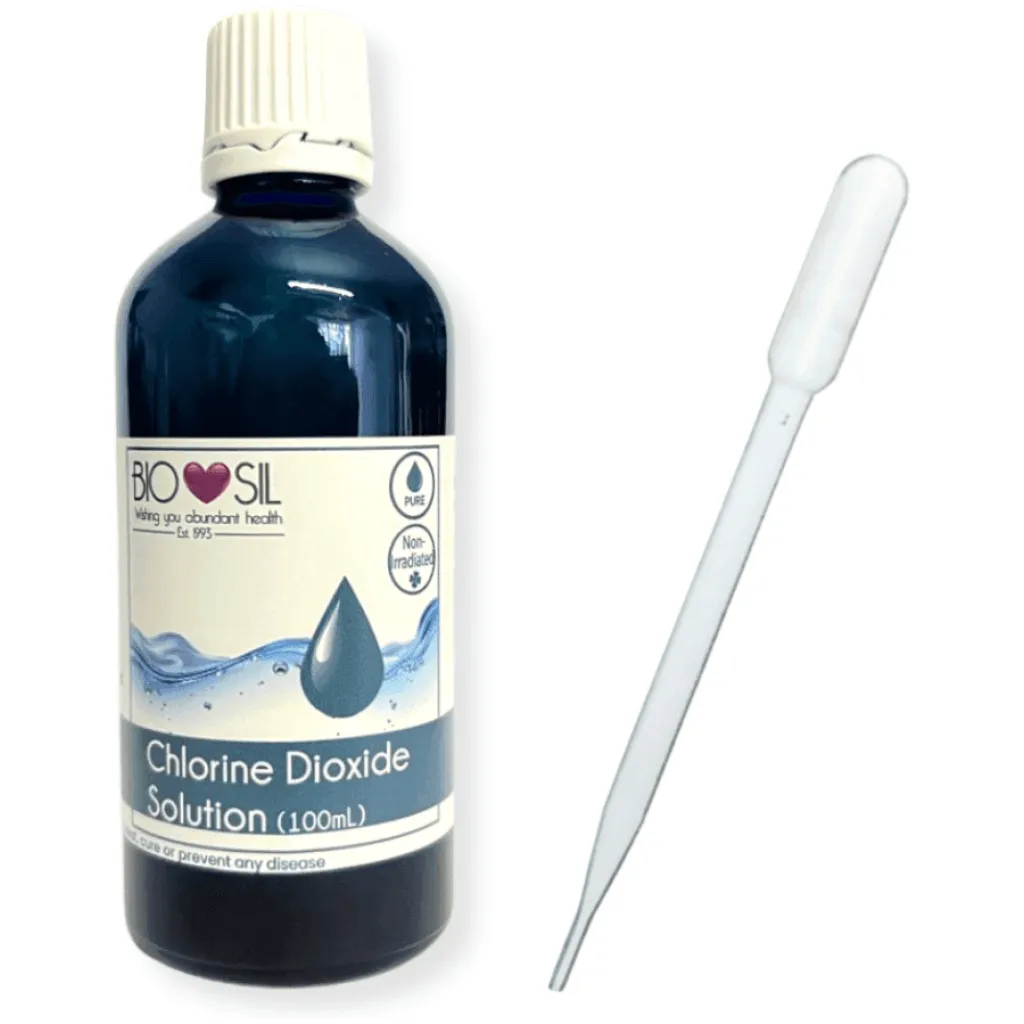
PLEASE NOTE : IMPORTANT ….. CDS must be refrigerated at all times to prevent it losing potency.
CDS is an advanced variant of chlorine dioxide (ClO₂) developed by Dr. Andreas Kalcker, used for therapeutic purposes and with fewer adverse effects than traditional solutions. CDS drops are ready to be added to pure water. Please take time to research the information provided here and at other accessible links.
